
Star Trek: Starfleet Academy Episode 1 wastes no time making one thing clear: this is a Star Trek story built in the shadow of failure. Set after the Burn, “Kids These Days” introduces a Federation that is still standing, but far from whole, and an Academy reopening not out of confidence, but necessity. Starfleet needs officers. It needs belief. And it’s willing to bend rules it once treated as sacred to get both.
That tension defines Starfleet Academy Episode 1, especially through Caleb Mir, played by Sandro Rosta. Caleb isn’t a prodigy groomed for command; he’s a survivor shaped by abandonment, coercion, and institutional indifference.
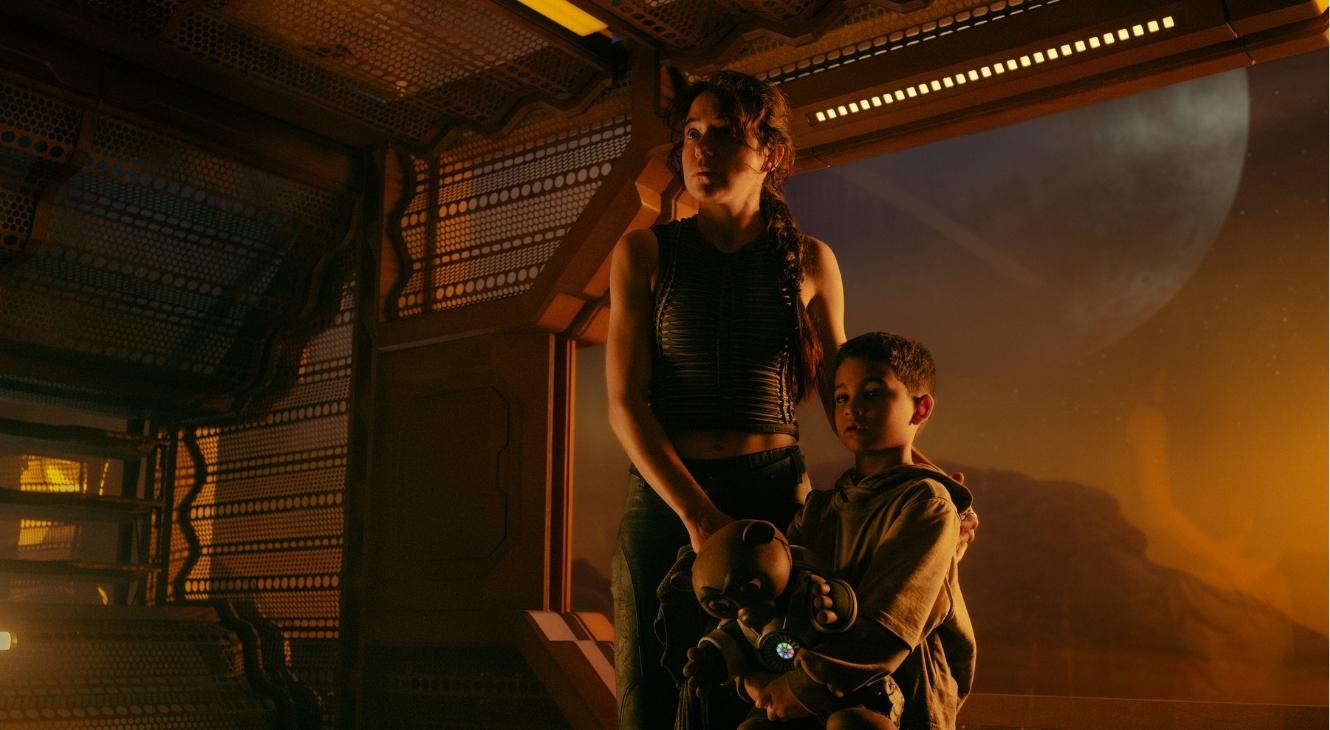
The opening sequence, in which Caleb is separated from his mother Anisha after a botched theft meant to secure food, is one of the episode’s strongest statements. It shows a Federation that didn’t do the right thing, one that punished the vulnerable while the system itself remained untouched. The trial, overseen by then Captain Nahla Ake, leaves behind a wound that defines both of their futures.
Tension permeates Star Trek: Starfleet Academy Episode 1 as rules are bent to make way for officers.
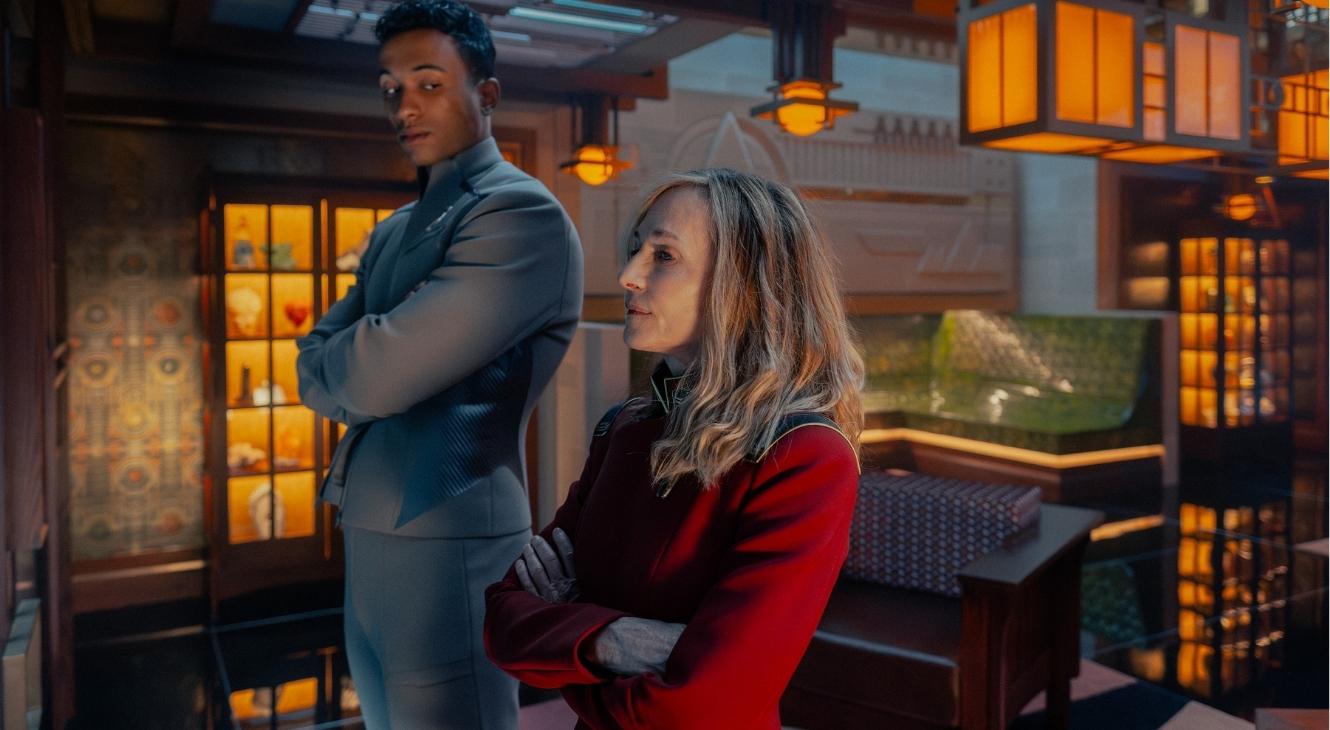
That history matters because “Kids These Days” never pretends Starfleet is morally intact. Nahla Ake, portrayed by Holly Hunter, carries visible shame over the trial and over Starfleet’s failure to live up to its own principles. When she’s later offered the chance to become Chancellor of the newly re-established Academy, it feels less like a promotion and more like an act of restitution. Reopening the Academy in San Francisco, where Star Trek itself originated, is a nostalgic moment after a reckoning.
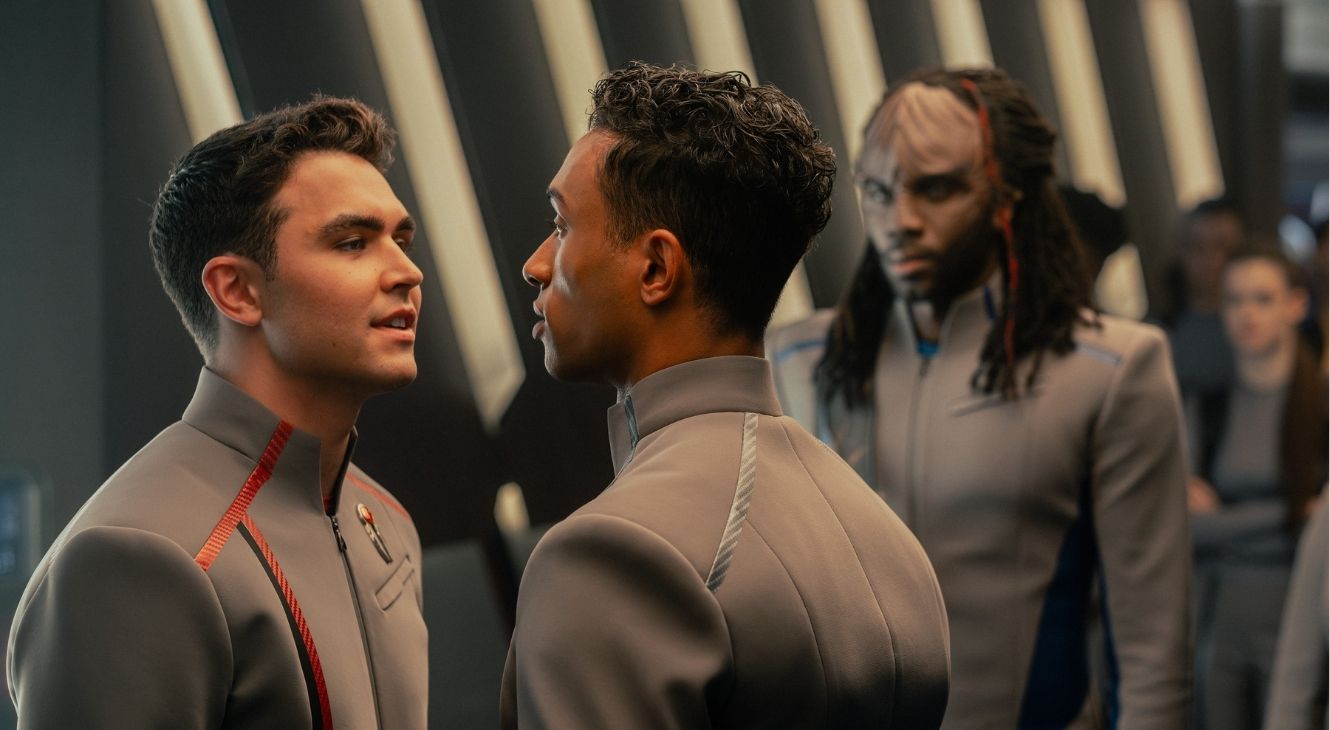
Starfleet isn’t just expanding its ranks; it’s redefining who belongs. The incoming class is intentionally messy, made up of cadets who wouldn’t have fit neatly into earlier eras of the Federation. Jay-Den (Karim Diane), a Klingon who wants to study molecular biology instead of seeking a glorious death. Series Acclimation Mil, aka SAM (Kerrice Brooks), a Kasqian experiencing life for the first time. Darem (Bella Shepard) and Genesis (George Hawkins) each carry their own baggage of expectation and privilege. This is a crew formed by difference, not discipline, and the Starfleet Academy Episode 1 makes it clear that their diversity isn’t cosmetic.
That idea is tested almost immediately aboard the USS Athena, a ship whose name choice quietly reinforces the episode’s thesis. Athena is the goddess of wisdom as well as warfare, and the ship’s design reflects that intent. Sleek, modern, and striking, it visually signals a Starfleet trying to rebuild its moral authority rather than simply its fleet. When the cadets are forced into crisis on their very first journey, it’s their varied backgrounds and instincts that allow them to succeed. No single culture’s approach would have been enough.
Paul Giamatti is delightful as the series’s emerging antagonist.
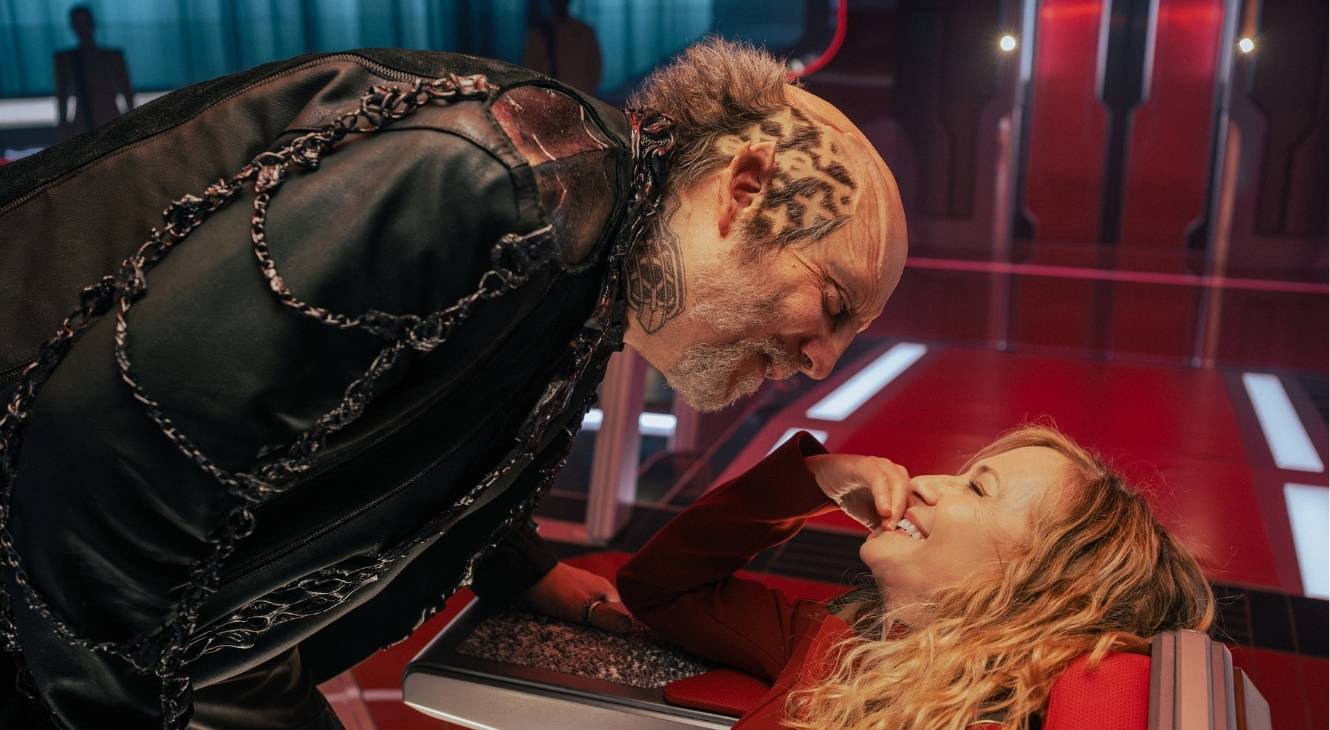
Starfleet Academy Episode 1’s central antagonist, Nus Braka, played with gleeful menace by Paul Giamatti, ties the personal and political threads together. His attack on the Athena turns Caleb’s unresolved trauma into a present danger, setting up a long-term conflict that both Caleb and Chancellor Ake will have to confront. Giamatti’s performance does exactly what it needs to do: he’s charismatic, cruel, and immediately punchable, a reminder that Starfleet’s past mistakes don’t stay buried just because the institution wants to move forward.
If “Kids These Days” stumbles anywhere, it’s in some of its comedic dialogue. A few jokes land awkwardly against the Starfleet Academy Episode 1’s otherwise heavy tone, especially in scenes trying to balance tension with levity. With such a large ensemble, the writing occasionally rushes through introductions and character beats that might have benefited from more breathing room. This isn’t the precision comedy of Lower Decks, where a smaller cast allows personalities to fully settle before colliding. Here, the humor sometimes feels like it’s sprinting to keep up.
Still, those issues feel more like growing pains than structural flaws. Chemistry takes time, and Star Trek has always found its rhythm by letting characters grow into one another. There’s a confidence in how Starfleet Academy Episode 1 establishes its themes, even if not every line lands cleanly. By the end, the core relationships are in place, the conflicts are clear, and the series’ direction feels purposeful.
Some awkward dialogue and comedy delivery marks some of the more cringe parts of the opener.
What makes Star Trek: Starfleet Academy Episode 1 work is that it understands the moment it’s set in. This is a Federation rebuilding after a collapse, questioning its assumptions, and learning that inclusion isn’t just a slogan, but a necessity. Caleb’s journey toward becoming a reluctant leader feels inevitable. His anger isn’t something to be fixed; it’s something Starfleet has to earn its way past.
Star Trek: Starfleet Academy Episode 1 may not be the strongest Star Trek premiere ever, but it does exactly what a first episode should do. It establishes the crew, defines how they’re different from what came before, and lays bare the moral cracks the series intends to explore. In a franchise built on optimism, it’s refreshing to see a future that feels hopeful, not because everything is fine, but because people are finally willing to admit it isn’t.
Starfleet Academy Episodes 1 & 2 are streaming now on Paramount+ with new episodes every Thursday.
Star Trek: Starfleet Academy Episode 1
7.5/10
TL;DR
Star Trek: Starfleet Academy Episode 1 may not be the strongest Star Trek premiere ever, but it does exactly what a first episode should do.