
I love a good legal drama. And while Netflix’s live-action adaptation of mangaka Shohei Manabe’s Sins of Kujo (Kujō no Taizai) isn’t exactly that, it does take a specific look at the role of a lawyer in a justice system that can’t always protect the vulnerable, and where every person, regardless of their guilt, background, and yeah, even if they’re a horrible gangster.
Written for the screen by Nonji Nemoto and starring the incomparable Yuya Yagira in the titular role of Taiza Kujo, Sins of Kujo offers audiences an exploration of the underbelly of modern society and consistently pulls the idea that “legality does not equal morality” into a stark focus.
Taiza Kujo is a lawyer notorious for being a defense attorney for the most reprehensible gangsters and criminals. As their defender, he doesn’t worry about morality; he always does what is best for the client. Even if they’re the worst of the worst, they still deserve a defense, right?
Sins of Kujo is a legal drama that captures the complexities of a broken justice system.

But Kujo isn’t alone. The pressure point in Kujo’s career mounts when University of Tokyo graduate Shinji Karasuma (Hokuto Matsumura) begins working for him. An elite lawyer in his own right, working as a criminal’s defense, is something that Karasuma has a hard time understanding. For him, the law exists for justice and standing by truly evil people, violent people, and making sure they don’t see jail time, while that goes against everything he believes in.
The duo makes up the Kujo Law Firm, which mostly defends thugs, gangsters, and Yakuza members. Kujo, the stoic, “emotions don’t belong in law,” on one end, and Karasuma’s ability to be easily swayed by emotions and the need to do the right thing, on the other.
Bridging procedural legal drama and traditional J-drama, Sins of Kujo is a manga adaptation that thrives in the complexity of the human condition. This series lives in the moral gray. Each episode of Sins of Kujo comes close to working as a case of the week, with Kengo Mibu (Keita Machida) dropping new clients on Kujo’s doorstep every chance he gets.

An auto repair shop owner with deep underworld ties, Mibu’s core drive is for power and money. As the Kujo and Karasuma work together, the situation becomes more complex than just whether to defend criminals. Mibu’s background and connections cause a central conflict in the series, but more importantly, his relationship with Kujo drives the series narrative depth.
Mibu and Kujo’s relationship puts them under the watchful eye of Yoshinobu Arashiyama (Takuma Otoo), a detective looking to put them behind bars, and Kiyoshi Kyogoku (Tsuyoshi Muro), the formidable second-in-command of the Fushimi-gumi gang. As the cases get more complex, Sins of Kujo increasingly forces its audience to grapple with its protagonists.
“Are we supposed to root for Kujo?” is a valid question, and one any viewer would start asking after just two cases at the beginning of the series. Still, the reason Sins of Kujo works extremely well as a series is that, like the young Karasuma, the more time we spend with Kujo, the more we begin to understand that the cold, callous view of law isn’t all that he is.
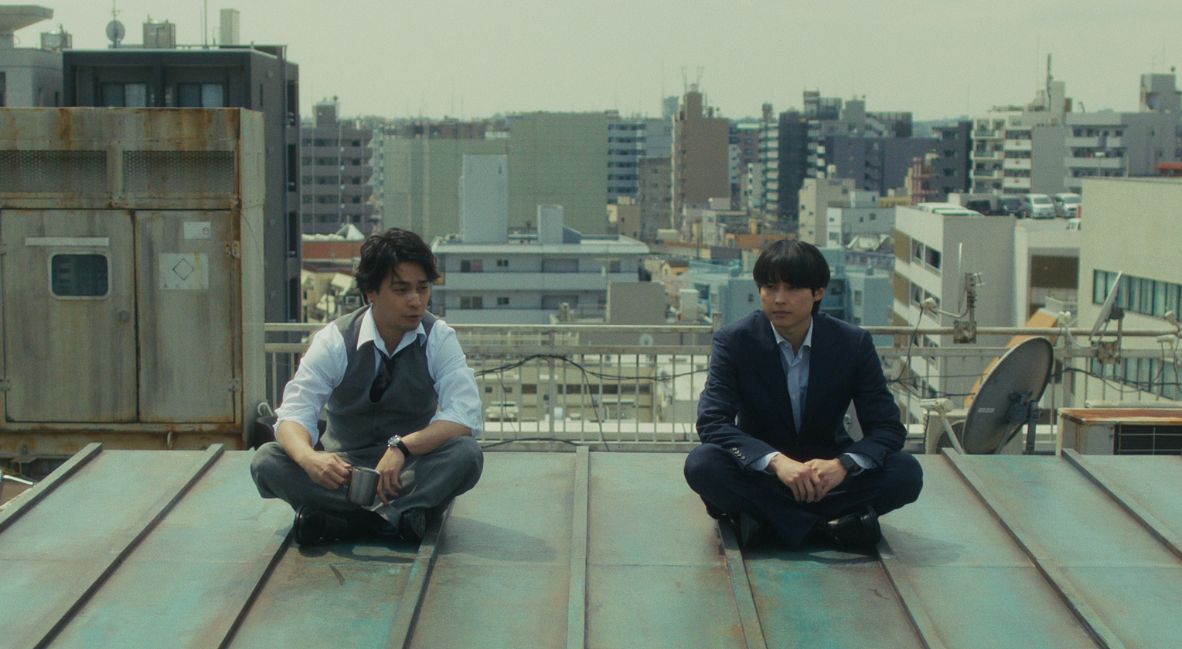
While he has a nasty streak of a personality, Kujo isn’t devoid of kindness. As Kujo, Yuya Yagira‘s performance is that of a man with much more going on underneath the mask he wears in front of others. Living in a tent on a roof, taking in a dog when it looks like he will be put down or abandoned, there are elements of his life that stand out as things you wouldn’t expect.
Sins of Kujo is all about the gray area of morality and justice.

Working with Mibu, it is easy to assume that Taiza Kujo is about making money. Instead, Kujo’s simple belief that everyone deserves representation is where every narrative thread begins, not money or power. For Kujo at least. Seeing Kujo through Karasuma’s eyes, we start to understand the small ripples that Kujo creates with his defenses.
Where Karasuma sees Kujo as letting a violent man off the hook and an innocent man take the fall, the reality is that he has done what he can to lighten the innocent man’s sentence. Stopping just short of getting exonerated, only because the justice system’s reach ends outside the courtroom and jail. On the outside, there is no protection from the danger that comes with putting a drug dealer behind bars.
There are elements to each case that come together like a puzzle. Sometimes, even the person Kujo and Karasuma are protecting, as ultimately innocent, deserves some punishment for irretrievably changing someone’s life. Kujo’s stoicism toward the law has protected him, but more importantly, he’s an example of saving and helping people through a broken system, not outside it.
Your class matters. Your gender matters. Who you are matters in how the justice system sees you. Whether you’re cast out as guilty or even believed to be a victim. This is how Sins of Kujo executes its narrative, and it does so without ever crossing into hamfisted territory.
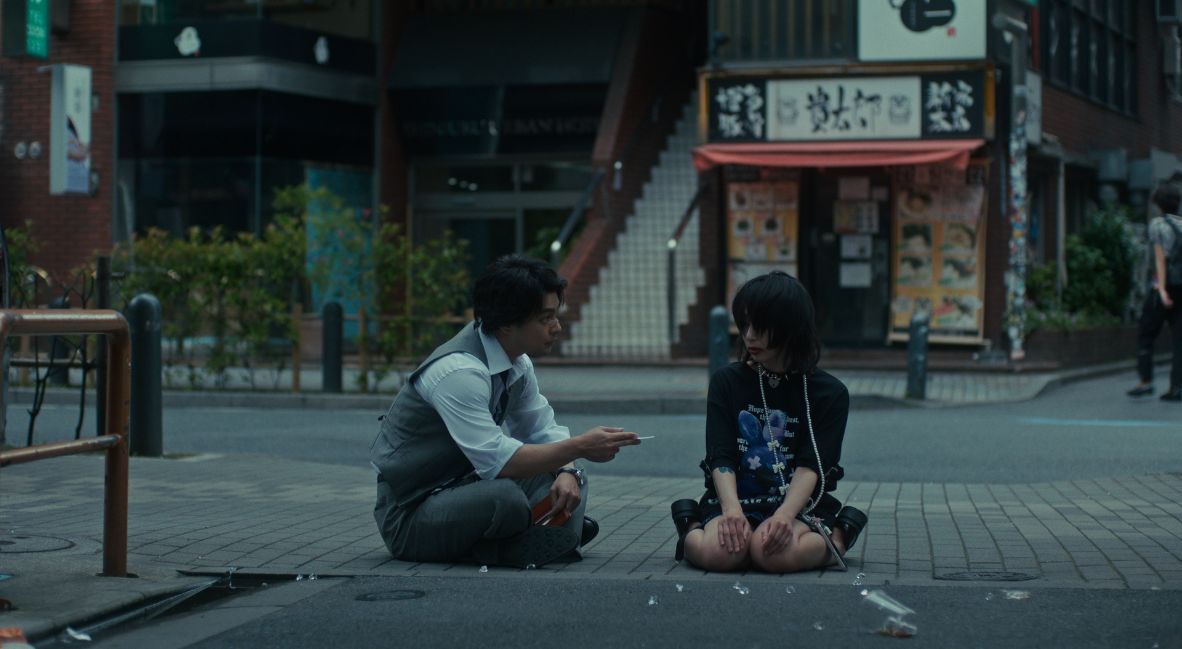
Where Karasuma would rather not take up a defense case to begin with, Kujo would rather take the case, defend his client, and protect the victims where he can. Functionally, we can see that his defense attorney is an anti-hero, with an individual sense of justice and no need to reap any benefits from society when he helps people.
Taiza Kujo’s choices aren’t always wrong, and Karasuma’s aren’t always right. As a protagonist and his foil, the duo creates a story worth grabbing onto. However, as things devolve around them, Kujo winds up turning his back on his own emotionless rules.
While the tonal shift in the back-half of the season may throw some in the audience off, when you understand the series as only ever working in shades of gray, it begins to make sense. Morality and justice are squishier concepts than we like to believe, and Sins of Kujo explores that, and how your personal circumstances mold how you engage with these concepts.
Yuya Yagira’s performance grounds the series and pushes it further.

This is Yuya Yagira’s series through and through, which leaves Hokuto Matsumura’s Karasuma on the sidelines looking in. While the dynamic between Kujo and Kasamura is a good one, the emotional depth we see layered onto Kujo’s character doesn’t always extend to his foil. Instead, Matsumura’s is more reactionary than not, and often serves as an insert for the audience.
The only reason this is frustrating is just how well Hokuto Matsumura can act, as he showed in his debut feature 5 Centimeters Per Second (the live-action adaptation of the anime film). A former idol, it’s exciting to see a multihyphenate performer on screen, but as Kasamura, he needed more depth to match Yuya Yagira’s commanding performance.
Sins of Kujo is a testament to how well-grounded manga adaptations can succeed on large platforms like Netflix. A legal drama first, this J-drama adaptation forces its audience to understand the complexity of life and the fallibility of the justice system in no uncertain terms.
Sins of Kujo is streaming now, exclusively on Netflix.
8/10
TL;DR
A legal drama first, this J-drama adaptation forces its audience to understand the complexity of life and the fallibility of the justice system in no uncertain terms.