
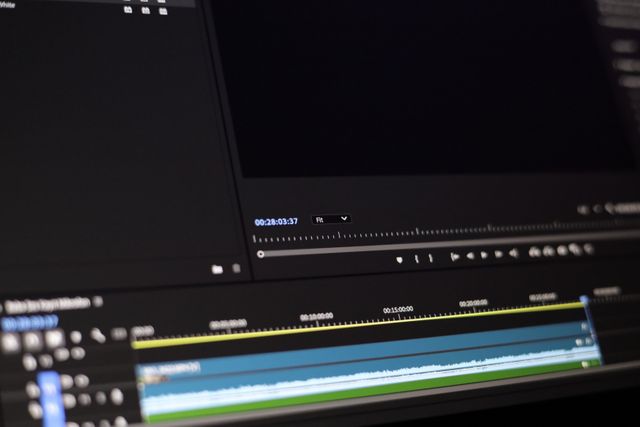
Honestly, video editing has never been easy. You need to know your way around technical stuff, have a creative eye, and — let’s be real — a ton of patience. Editors sit through hours of footage, try to figure out what’s worth keeping, arrange clips, fix audio, add captions, and then redo everything because different platforms want different formats. AI is shaking all of that up. Now you can basically just describe what you want in normal words and get help with the boring repetitive tasks that eat up your day.
But it’s not replacing editors. Never will. Think of AI more like an extra pair of hands — it’s another layer in the creative process. You can use a chat-based interface to sort your ideas and clips before jumping into the actual timeline for the detailed work.
So What Is AI-Assisted Video Editing?
It’s basically software that uses machine learning and language systems to help with the stuff that goes into making a video. Depending on which platform you’re working on it might help you find the important bits in your footage, cut out the stuff that doesn’t matter, generate captions, organize your clips, change formats or, even better, suggest how to structure your whole project.
The thing that makes it different from traditional editing is how you give instructions. Instead of clicking through a hundred menus, you can just say what you want in plain English. Like, “Take this long interview and make it into a short highlight, but keep the good stuff.” The system then throws together a rough starting point that you can review and change.
How ChatGPT-Style Interfaces Help
These chat-based tools are really good at turning your ideas into actual tasks you can work with. You can write out a quick brief — who’s watching, how long it should be, what kind of vibe, which scenes matter, and what format you need.
Something like a ChatGPT video editing tool can fit right into this kind of setup. It connects what you type in natural language to an actual editable video project. You feed it your raw clips and it can organize them into a preliminary cut that’s ready for you to look over.
This saves a lot of time at the beginning. Instead of starting from scratch with a blank screen, you can work with a draft and focus on the stuff that actually matters — the story, pacing, visuals, and sound.
Going Through Raw Footage
This might be the most exhausting part of making a video. You’ve got pauses, repeated takes, random irrelevant bits, and sometimes like five different versions of the same sentence. AI can help by scanning through all that and picking out moments that might be useful, then lining them up in a rough order.
But here’s the thing… AI isn’t perfect. It can’t really understand context or creative intent, especially when there’s humor, emotion, cultural references or subtle storytelling involved. So use what the AI provides as a rough starting point, not the finished article. You can shuffle clips, shorten things, change the order, tweak the transitions – whatever you need to do once you see the first result.
Captions and Accessibility
Manually typing out every word and syncing it with the audio is a massive time sink, especially for long videos. AI tools can recognize speech and generate captions that you can then check and fix. That helps not just for accessibility but also for the tons of people who watch videos without sound.
That said, auto-generated captions aren’t perfect. They get names wrong, mess up technical terms, struggle with accents, and sometimes fall apart when there’s background noise or multiple people talking at once. You still need a human to go through and proofread, especially if the video has important facts or specialized language.
Making Content Work Across Platforms
These days creators need multiple versions of the same video. Something made horizontally for a website might need to be vertical for short-form platforms. A long interview might need to be chopped into several smaller clips.
Artificial intelligence can help with this by finding parts that work well in smaller formats and setting up different sizes and structures. But you will want to look closely at the framing, because automatic cropping can sometimes cut off visually important stuff. The idea is not to make more versions, but to make the adaptation less tedious and not lose the essential message.
Why Human Judgment Still Counts
AI has gotten better for sure, but video editing is an art. Software can see patterns and do what it’s told, but it doesn’t really get why one shot is better than another.
Accuracy Emotional tone Copyright issues and brand consistency Humans are still needed for story telling Or maybe an AI will generate a sequence that technically meets your request, but still seems weirdly paced or just wrong in vibe.
The sweet spot is to combine automation with human decision making. If you’re doing creative work, let AI do the prep work and the boring stuff, but leave the creative decisions to a human.
Privacy and Copyright
This is something creators really need to think about. The material you feed into AI tools might contain personal information, private conversations, unreleased work, or content that belongs to other people.
Before uploading anything, make sure you understand how the service handles your data and that you actually have permission to use the footage and audio. This is getting more and more important as AI gets more deeply integrated into creative software.
Where This Is All Heading
AI is going to become a more built-in part of the production process rather than being a separate step. If you look at what’s happening across editing platforms, there’s a clear move toward natural-language help, automated organization, captioning, media generation, and overall workflow automation.
The best systems won’t be the ones that try to do everything on their own. They’ll be the ones that reduce the repetitive work while still giving creators enough control to review, modify, or reject any automated choices.
For people just starting out, this can lower some of the technical barriers that used to make video editing intimidating. For experienced editors, it can be a faster way to handle big piles of material. In both cases, the best results come from treating AI as an assistant — not some unquestioned replacement for creative judgment.
As these technologies keep moving forward, video editing might become less about doing every single technical thing by hand and more about clearly explaining your creative vision, reviewing what comes out, and refining the story until it feels right.