
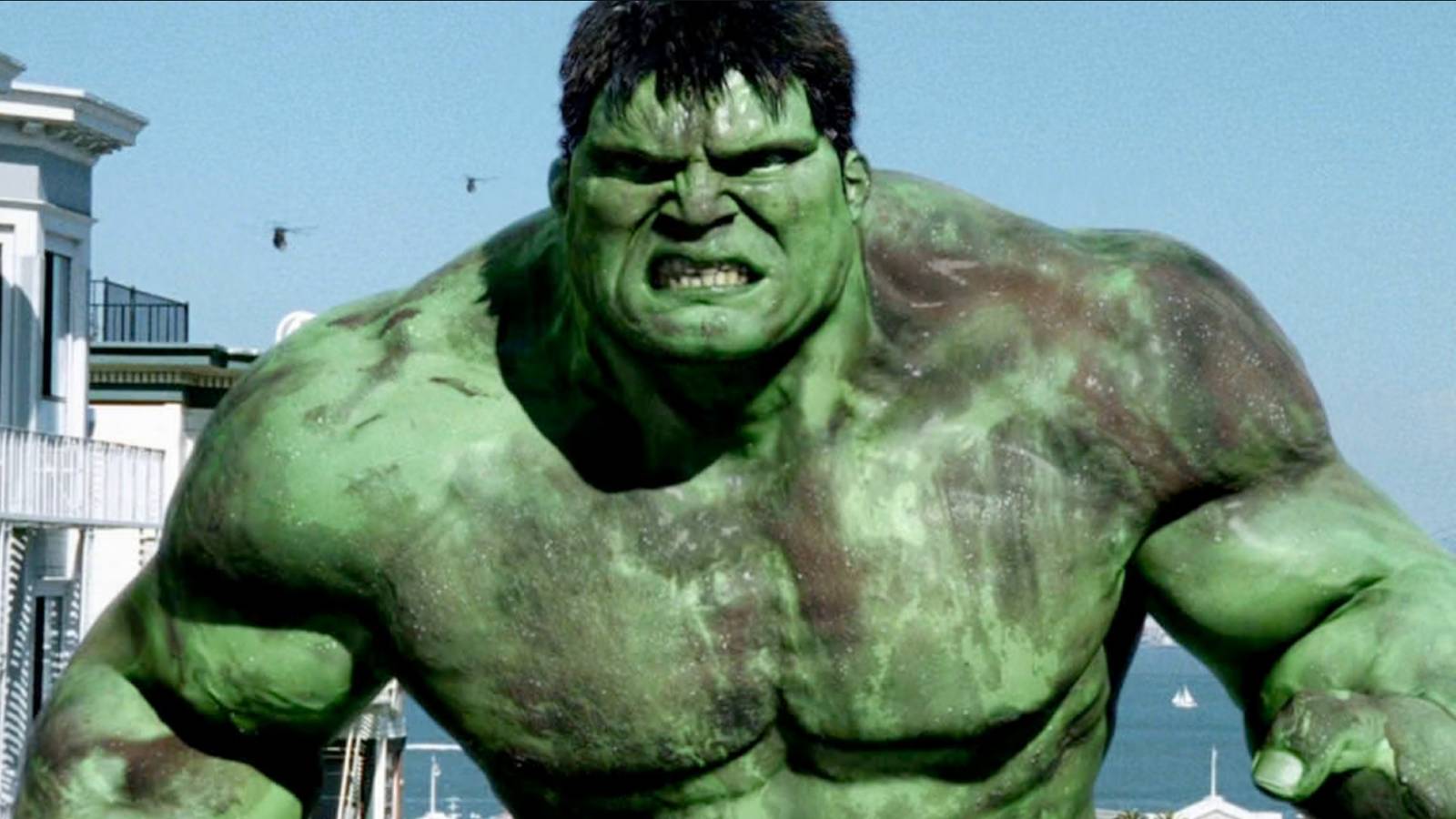
Despite what people might assert, Ang Lee’s version of Hulk is far more effective than the MCU in some key ways. The Hulk has appeared in countless Marvel movies and TV shows over the decades, but few live-action adaptations remain as divisive and fascinating as 2003’s Hulk. Yet, despite its less than favorable reputation, Ang Lee’s version of Hulk is superior in several ways.
Released years before the MCU timeline fully transformed superhero cinema, Ang Lee’s take on Bruce Banner was not designed to be a crowd-pleasing blockbuster filled with quips and crossover setup. Instead, it approached the Hulk mythos like a psychological tragedy, blending comic book visuals with deeply uncomfortable themes about trauma, repression, identity, and inherited abuse.
Audiences at the time were split on the film’s slower pacing and experimental style, but its reputation has steadily improved in the years since release. Meanwhile, the MCU’s Hulk has become one of Marvel’s most recognizable characters thanks to Mark Ruffalo’s charming and likable performance across multiple ensemble films. The franchise successfully turned Hulk into a lovable Avenger whose transformations often function as exciting crowd-pleasing moments rather than horrifying losses of control.
While that approach clearly worked for mainstream audiences, it also meant the MCU gradually moved away from many of the darker psychological ideas that originally made Hulk unique. As a result, Ang Lee’s version still stands out because it explored parts of Bruce Banner that the MCU has largely avoided ever since.
Hulk Is A Psychological Character Study

One of the biggest differences between Hulk and the MCU’s interpretation is that Ang Lee treats Bruce Banner less like a conventional superhero and more like a deeply traumatized man struggling with fractured identity. The Hulk is not simply presented as a monster Bruce occasionally turns into after getting angry.
Instead, the film strongly suggests Hulk functions as an alter born from years of repression, childhood trauma, and emotional suppression. This aligns closely with many comic interpretations of Bruce Banner, particularly storylines exploring dissociative identity disorder, themes that the MCU has almost entirely ignored.
Scenes like Bruce’s fragmented dream sequences and the famous mirror scene portray Hulk as something psychologically embedded within him rather than a separate being entirely. The transformations feel tied to buried emotional pain and unresolved abuse connected to his father, making the Hulk an extension of Bruce’s damaged psyche.
The MCU briefly explored some of this complexity in The Incredible Hulk with Edward Norton’s more haunted interpretation, but later movies largely pivoted away from it in favor of humor and accessibility. Ang Lee’s film may be unconventional, but it understands Hulk’s psychology in a way few adaptations truly attempt.
Hulk’s Transformations Are More Terrifying Than Triumphant

In the MCU, Hulk transformations are often framed like major crowd-cheering moments. Audiences wait for Bruce Banner to finally lose control because it usually means a huge action sequence, a funny one-liner, or an overpowering display of strength is about to happen. While entertaining, that approach fundamentally changes the emotional meaning behind Hulk’s existence.
In Hulk, transforming into Hulk feels genuinely horrifying, painful, and deeply traumatic for Bruce Banner every single time it happens. Ang Lee presents the process almost like body horror, emphasizing Bruce’s panic, physical agony, and total loss of control. The sound design, distorted visuals, and unsettling editing make each transformation feel less like a superhero upgrade and more like psychological collapse manifesting physically.
Hulk is not treated as an empowering release for Bruce; he is the terrifying consequence of years of emotional repression erupting violently into the world. The MCU briefly retained some of this horror-inspired approach in The Incredible Hulk, where Edward Norton’s Bruce viewed Hulk as a curse he desperately feared, with a notably painful transformation scene.
However, later films gradually reframed Hulk as more comedic and heroic, especially after Thor: Ragnarok. Ang Lee’s version remains more emotionally unsettling because it never allows audiences to fully enjoy Bruce losing himself.
Hulk Explores Generational Trauma

One of the most fascinating aspects of Hulk is how directly it tackles generational trauma, which has long been one of the defining themes of Hulk comics. Rather than presenting Bruce Banner’s suffering as the accidental result of gamma radiation alone, the movie frames Hulk as the culmination of years of inherited emotional damage, abuse, and repression passed down from father to son.
Nick Nolte’s David Banner is the source of Bruce’s fractured identity and buried rage. The film repeatedly emphasizes how Bruce has spent his entire life suppressing painful memories and emotions connected to his childhood trauma. Hulk becomes the physical manifestation of everything Bruce was taught to contain.
This idea has deep roots in Marvel Comics, where Bruce’s abusive upbringing often plays a central role in explaining Hulk’s existence and fractured psyche. By comparison, the MCU mostly reduces Bruce’s condition to a scientific accident with occasional emotional complications attached.
While the MCU explores Hulk’s identity crisis in lighter ways, it rarely examines the deeper psychological scars driving the character. Ang Lee’s film understands that Hulk is terrifying precisely because Bruce’s pain never truly disappears.
Hulk Is Far More Comic-Accurate

Despite being criticized at release for its unusual style, Hulk is arguably one of the most comic-accurate live-action interpretations of Hulk ever made. Ang Lee fully embraces the character’s exaggerated comic book nature instead of trying to ground him too heavily in realism. Hulk grows larger and stronger the angrier he becomes, performs enormous gravity-defying leaps across miles of terrain, and feels almost mythological in scale.
Those details may seem obvious now, but surprisingly few live-action Hulk adaptations fully commit to them. The movie also visually mimics comic panels through split-screen editing and stylized transitions, making it feel intentionally designed like a living comic book rather than a standard action blockbuster. More importantly, the film captures Hulk’s emotional symbolism from the comics.
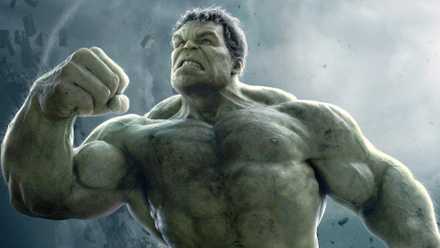
10 Most Underrated Hulk Scenes In The MCU
From quiet vulnerability to blink-and-miss-it comedy, these underrated Hulk moments reveal the MCU’s green giant is more than just smash and chaos.
The MCU’s Hulk certainly borrows many iconic visual elements from the comics, but it often reshapes the character around ensemble storytelling needs. As a result, Hulk sometimes feels more like a supporting Avenger than the tragic, uncontrollable force central to his original stories. Ang Lee’s version unapologetically prioritizes Hulk’s comic book identity above franchise accessibility.
Hulk Is A Nearly Unstoppable Force

One thing Hulk captures extremely well is the sheer terror of Hulk feeling genuinely unstoppable. Once Bruce transforms, the military becomes almost completely incapable of containing him despite deploying tanks, helicopters, missiles, and entire battalions against him. Hulk tears through everything in his path with overwhelming force, and the movie constantly emphasizes that humanity has created something it fundamentally cannot control.
That overwhelming power is a core part of Hulk’s comic identity. Importantly, the film also treats Hulk’s strength as escalating alongside his anger. The longer the conflict continues, the more dangerous and physically imposing he becomes. This creates the sense that fighting Hulk directly only makes the situation worse, which mirrors the comics far more closely than many later adaptations.
By contrast, the MCU’s Hulk often feels inconsistent depending on the movie surrounding him. His power level frequently changes based on narrative convenience or another character’s progression arc.
She-Hulk: Attorney at Law drew criticism for seemingly weakening Hulk to emphasize Jennifer Walters’ abilities, while Avengers: Infinity War famously had Hulk lose decisively to Thanos early on. Ang Lee’s version may lack crossover spectacle, but it understands Hulk works best when he feels almost impossible to stop once unleashed.

- Release Date
-
June 19, 2003
- Runtime
-
138 Minutes
- Director
-
Ang Lee
- Writers
-
James Schamus, John Turman, Michael France