
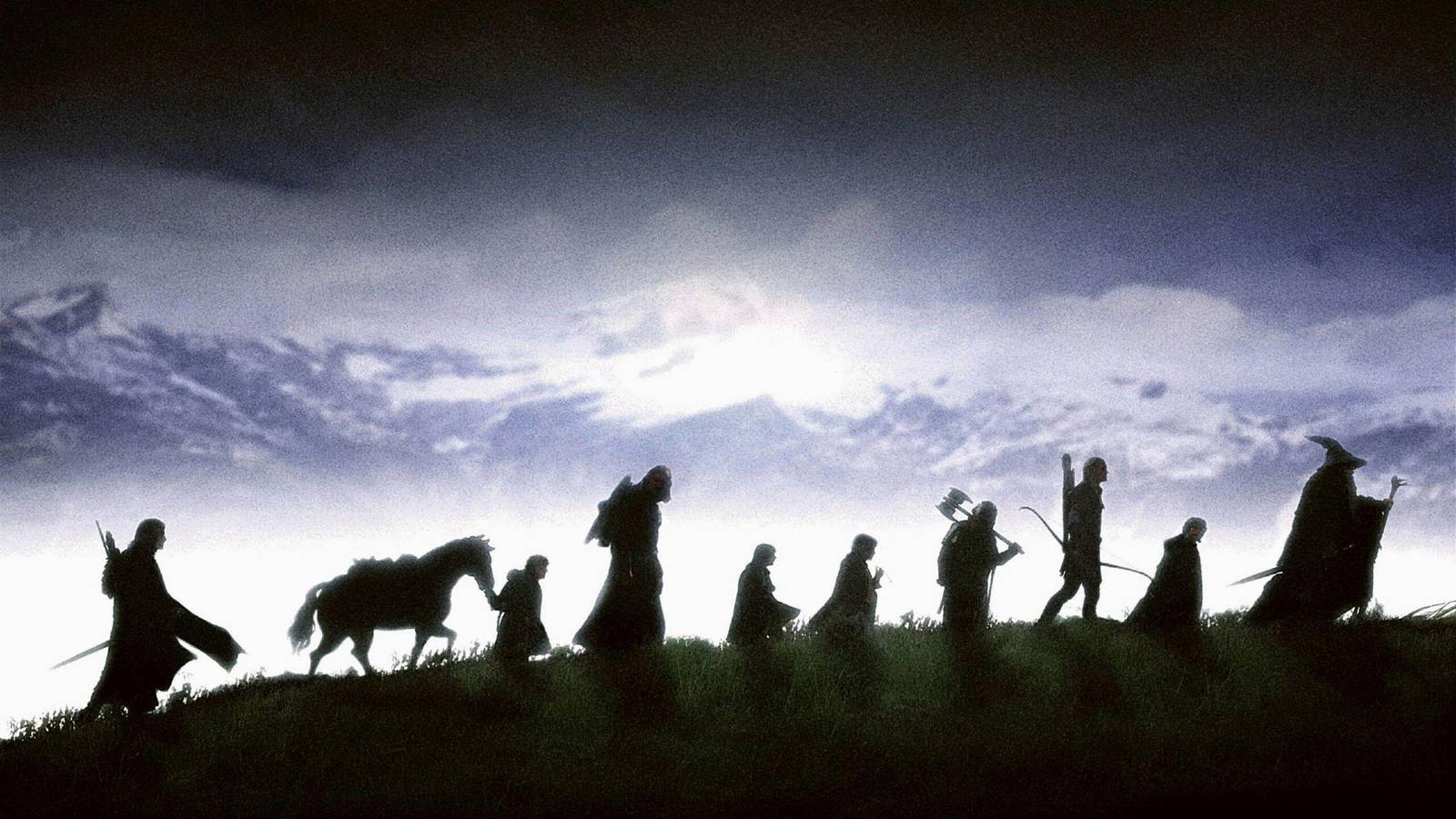
“Does Frodo really need the Fellowship?” is a question one might find themselves asking after The Lord of the Rings. The group is formed after the Council of Elrond with an explicit edict to help Frodo reach Mordor and destroy the One Ring. Alas, the band has already broken up by the end of the first book.
A reader might also ask whether each Fellowship member makes a telling contribution to the success of Frodo’s quest. Specifically, Legolas, Gimli and Boromir occupy shaky ground in this regard.
Does Frodo need a Fellowship if he manages the hardest part of the journey with just Sam and Gollum? Could the Hobbits reach the Anduin with just Gandalf and Aragorn as companions? Should Elrond send the Fellowship members to carry out separate tasks that help Frodo’s cause, since this is what happens anyway? Could any elf with archery skills replace Legolas?
In truth, the Fellowship needs to happen with those nine specific individuals – but not as a means of defeating Sauron. The party’s true purpose in The Lord of the Rings is quite different, and if the Fellowship had failed in this secret mission, Middle-earth’s future would have looked dark indeed.
The Real Purpose Of The Fellowship In The Lord Of The Rings

Elrond makes a very deliberate decision when picking the companions who will keep Frodo safe on the road to Mordor: he ensures all races of Middle-earth are represented. Men, elves, dwarves and hobbits each share an interest in Sauron’s downfall, so all should contribute their strength to the cause, but Elrond is also aware of the historic mistrust between parties. Representing all races in the Fellowship means that, crucially, no side can be accused of seizing the Ring for themselves.
The diversity of the Fellowship is, therefore, both a practicality and a symbol of unity. But it also hints toward the Fellowship’s true purpose.
More than safeguarding Frodo or ensuring Sauron’s downfall, the Fellowship serves to heal the divides that have dominated Middle-earth for thousands of years.
The elves and dwarves have been feuding since the days of the Silmarils. Men forged alliances and partnerships with both, but are generally viewed with mistrust and regularly manage to quarrel between themselves. Hobbits, meanwhile, are largely ignored and stay isolated. Morgoth and Sauron both exploited this lack of unity in the past, tightening their grasp on the Free Peoples.
The Fellowship was never an expedition against Sauron, but a means of healing Middle-earth.
How The Fellowship Improves Relations Between Middle-earth’s Races

The elves are already migrating to Valinor when The Lord of the Rings begins, but thanks to Legolas and Gimli, their beef with the dwarves is softened beforehand. Legolas and Gimli, of course, evolve from grudging rivals to the closest of friends during the War of the Ring. In the aftermath, Legolas visits the Glittering Caves, where Gimli establishes a new dwarven settlement, while Gimli becomes Valinor’s first dwarf.
Gimli also makes a positive impression upon Galadriel (and vice versa), so while Legolas and Gimli are only individuals within their respective races, their friendship soothes old wounds from centuries of antagonism between elves and dwarves.
Including Aragorn and Boromir in the Fellowship allows other races to witness the faults of men first-hand, but also their nobility and valor. As Lord of the Glittering Caves, Gimli’s immense respect for Aragorn and Boromir would spread to other dwarves and be passed down through generations, while the elves leave knowing Middle-earth is in safe hands as the age of men dawns.
Boromir distrusts the elves of Lothlórien, but their abundant aid proves him wrong. He clashes with Aragorn over strategy, but the two men unite behind a singular mission during Boromir’s last moments. When Aragorn does finally reach Gondor, he does so with the legacy of Boromir on his back, but not before bringing Rohan into the fold. Thus, the divisions between different factions of men begin to dissipate.
And, finally, all of Middle-earth learns not to underestimate hobbits. When Aragorn becomes King Elessar after the War of the Ring and works to unite the Kingdoms of Arnor and Gondor, he ensures the Shire is left to its own devices, undisturbed by bigger folk. It’s a sign of both respect and understanding.
Was Middle-earth Diplomacy Always The Real Reason Behind The Fellowship?

The Fellowship may fail in its original mission to escort Frodo to Mount Doom, but the relationships it fosters are a precursor to peace in the Fourth Age. If those steps are not taken, Aragorn’s reign may not bring such a lasting period of calm, as the remaining pockets of evil could once again seize upon Middle-earth’s lack of togetherness.
This isn’t what Elrond has in mind when he assembles Frodo’s companions, but forces more powerful than he might be influencing events. It is known that the War of the Ring’s outcome is guided to some degree by Erū Ilúvatar and the Valar. Eru causes Gollum to fall into Mount Doom, for example.
There is evidence in The Lord of the Rings that these divine beings also cast a significant hand over the composition of the Fellowship. Boromir is only in Rivendell during the Council of Elrond because of a prophetic dream he and his brother both experience, and The Lord of the Rings never fully explains why that dream occurs.
It’s entirely plausible, perhaps even likely, that this dream is placed in Boromir’s mind by higher forces, leading him to Rivendell and ensuring he joins the Fellowship’s quest. We can then infer that the Fellowship has little to do with the One Ring, and was always Eru’s way of giving Middle-earth a template for peace between races during The Lord of the Rings‘ Fourth Age. Not only was the Fellowship required, its nine members couldn’t have been anyone else.
- Created by
-
J.R.R. Tolkien
- Cast
-
Norman Bird, Anthony Daniels, Elijah Wood, Ian McKellen, Liv Tyler, Viggo Mortensen, Sean Astin, Cate Blanchett, John Rhys-Davies, Billy Boyd, Dominic Monaghan, Orlando Bloom, Christopher Lee, Hugo Weaving, Sean Bean, Ian Holm, Andy Serkis, Brad Dourif, Karl Urban, Martin Freeman, Richard Armitage, James Nesbitt, Ken Stott, Benedict Cumberbatch, Evangeline Lilly, Lee Pace, Luke Evans, Morfydd Clark, Mike Wood, Ismael Cruz Cordova, Charlie Vickers, Markella Kavenagh, Megan Richards, Sara Zwangobani, Daniel Weyman, Cynthia Addai-Robinson, Lenny Henry, Brian Cox, Shaun Dooley, Miranda Otto, Bilal Hasna, Benjamin Wainwright, Luke Pasqualino, Christopher Guard, William Squire, Michael Scholes, John Hurt
- Character(s)
-
Frodo Baggins, Gandalf, Legolas, Boromir, Sauron, Gollum, Samwise Gamgee, Pippin Took, Celeborn, Aragorn, Galadriel, Bilbo Baggins, Saruman, Aldor, Wormtongue, Thorin Oakenshield, Balin Dwalin, Bifur, Bofur, Bombur, Fili, Kili, Oin, Gloin, Nori, Dori, Ori, Tauriel, King Thranduil, Smaug, Radagast, Arondir, Nori Brandyfoot, Poppy Proudfellow, Marigold Brandyfoot, Queen Regent Míriel, Sadoc Burrows