
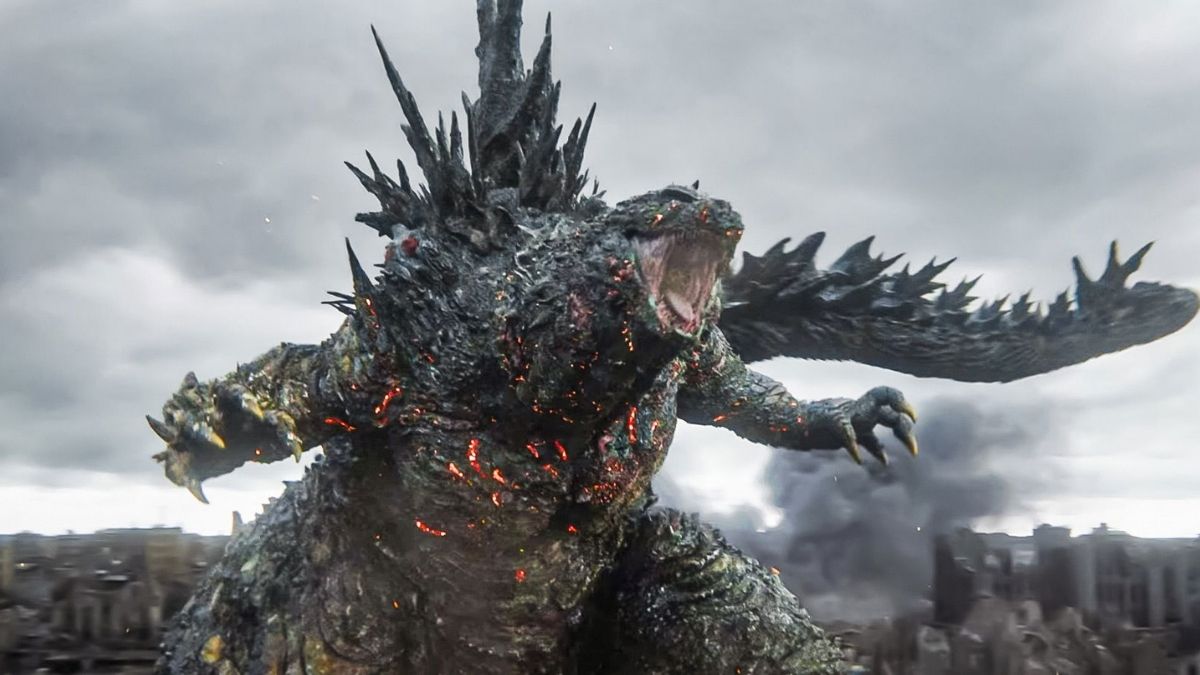
Godzilla Minus Zero is a feast of kaiju greatness, but in every other way, it fails to live up to the masterpiece that was Godzilla Minus One. While this could seem like an unfair comparison—Takashi Yamazaki’s first run at Godzilla was a near-perfect combination of monster madness and human heart—the sequel misfires on the heart and somewhat underwhelms on the monsters. There’s too much character baggage left over from the original and simply not enough Godzilla.
Set two years after Godzilla Minus One, the confusingly named Godzilla Minus Zero picks up immediately. An alien creature has landed in Japan, and the same scientists who dealt with Godzilla, led by Doctor Kenji Noda (Hidetaka Yoshioka), are tasked with figuring out how to stop it before it kills even more people than it already has. Meanwhile, Kôichi Shikishima (Ryûnosuke Kamiki), the hero from the previous movie, and his wife, Noriko Ôishi (Minami Hamabe), must balance parenting Akiko (Sae Nagatani), whom they adopted after the events of the previous movie, with their duties to their nation—and the world.
The human story doesn’t hold the kind of emotional weight that it thinks it does.
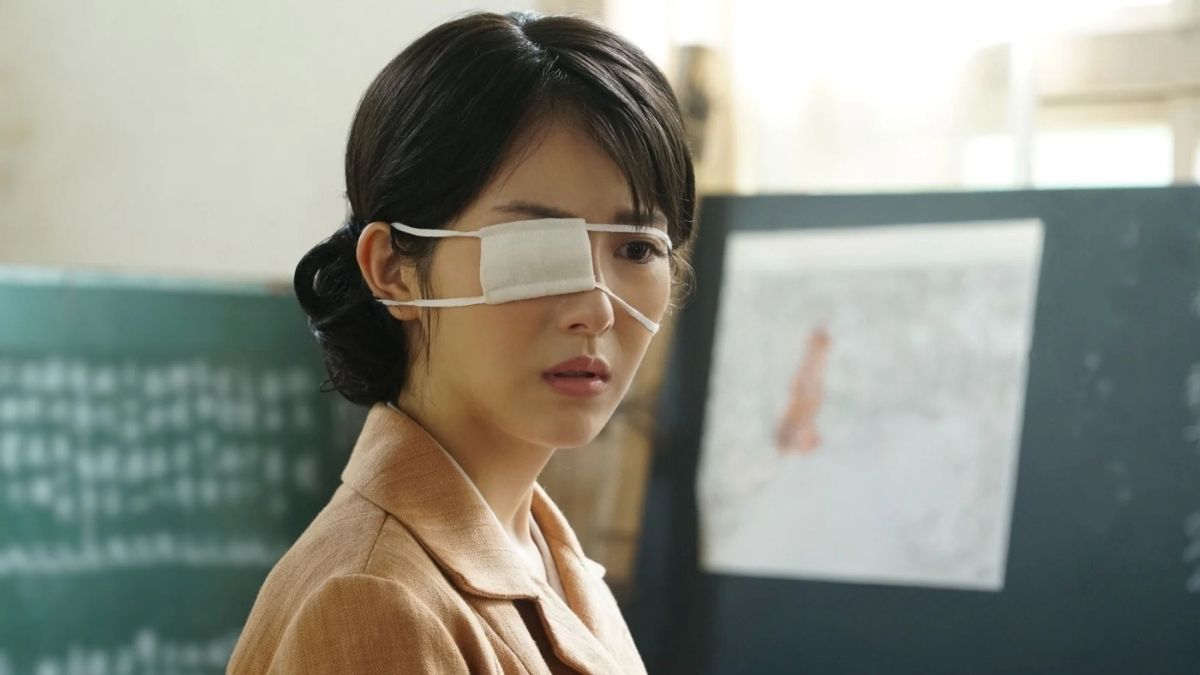
Godzilla Minus One did an exceptional job maintaining an emotionally rich human story while putting forth exhilarating kaiju action. The characters all have vast depth, and their conflicts are as fully realized as their resolutions.
In Godzilla Minus Zero, unfortunately, the audience is asked to carry all of the emotional weight from the previous movie with little support from the script. Kôichi and Noriko’s relationship and what they went through as individuals and as a family with Akiko is hardly mentioned, and when it is, it’s as a matter of fact, rather than to be built upon in this story.
While Akiko’s age and more central role in the narrative add some new weight, the emotions that should connect these three characters are left off the screen. Instead, the movie employs an uncomfortable amount of melodrama with unnecessarily comedic and awkward acting choices scattered between otherwise serious and intense interactions. The grounded world of Godzilla Minus Zero makes the devastation feel that much more real, but with nothing to ground the characters and too many uncontextualized callbacks to the previous movie, the human plot is just not enough.
The non-monster VFX are very bad.
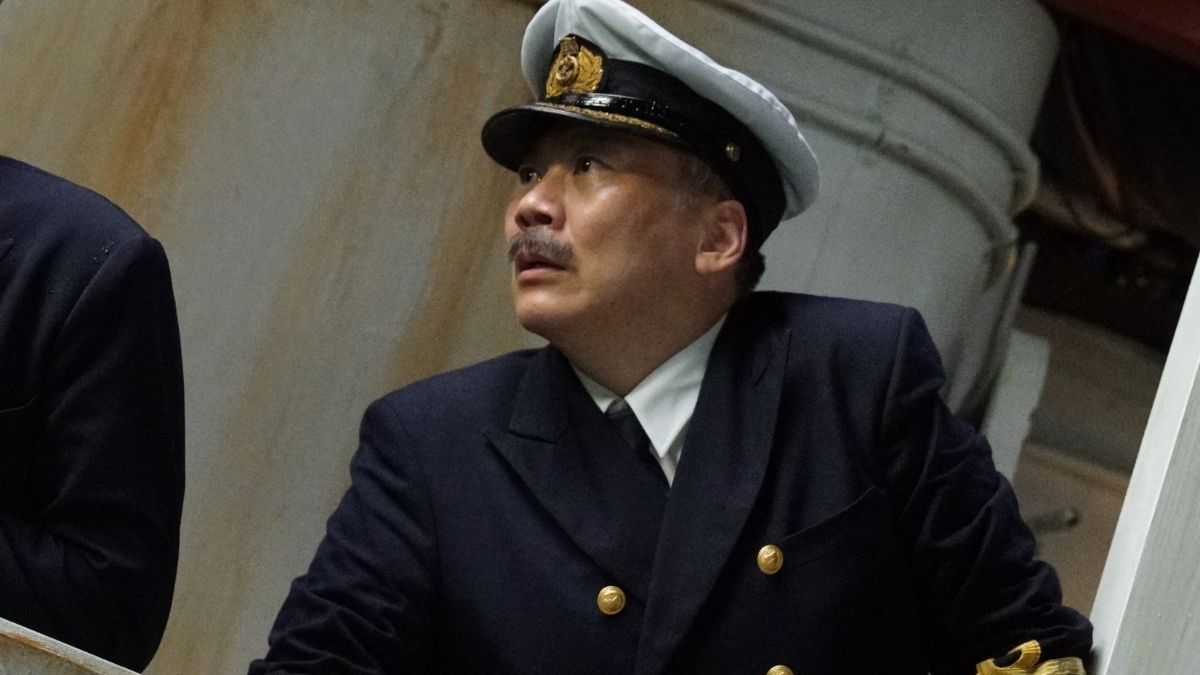
What makes it worse is that the VFX in the human scenes are terrible. There is rarely a human scene where the digital background doesn’t look jarringly fake against the scant real but clearly also fake objects. The way the actors are always set up in a line across the screen with a static camera on them makes it all too obvious that they are on a sound stage. Scenes that include moving vehicles are especially guilty of looking utterly fake. If the human interactions felt more real, the fake backgrounds may have been less distracting.
Fortunately, the monster VFX are excellent. Ghidora, Godzilla Minus Zero’s main alien threat, is an impressive-looking creation. And of course, Godzilla itself is looking as magnificent as ever. The initial Ghidora design leaves something to be desired. It is a very basic dragon that just happens to breathe lightning instead of fire. But once it transforms, boy, does that monster look great.
The movie probably would have benefited from a more interesting initial design, and from keeping the main, recognizable Ghidora out of the marketing so the transformation from a simple dragon creature into a three-headed monstrosity feels even more terrifying. Calling it Ghidora from the beginning is also odd. The scientists say it’s a portmanteau of ‘chimera’ and ‘hydra,’ but why would they name it after a 3-headed creature that grows more when you cut off its heads if they don’t know Ghidora will grow two more heads?
Godzilla Minus Zero’s most interesting messages get shrugged off by the end.
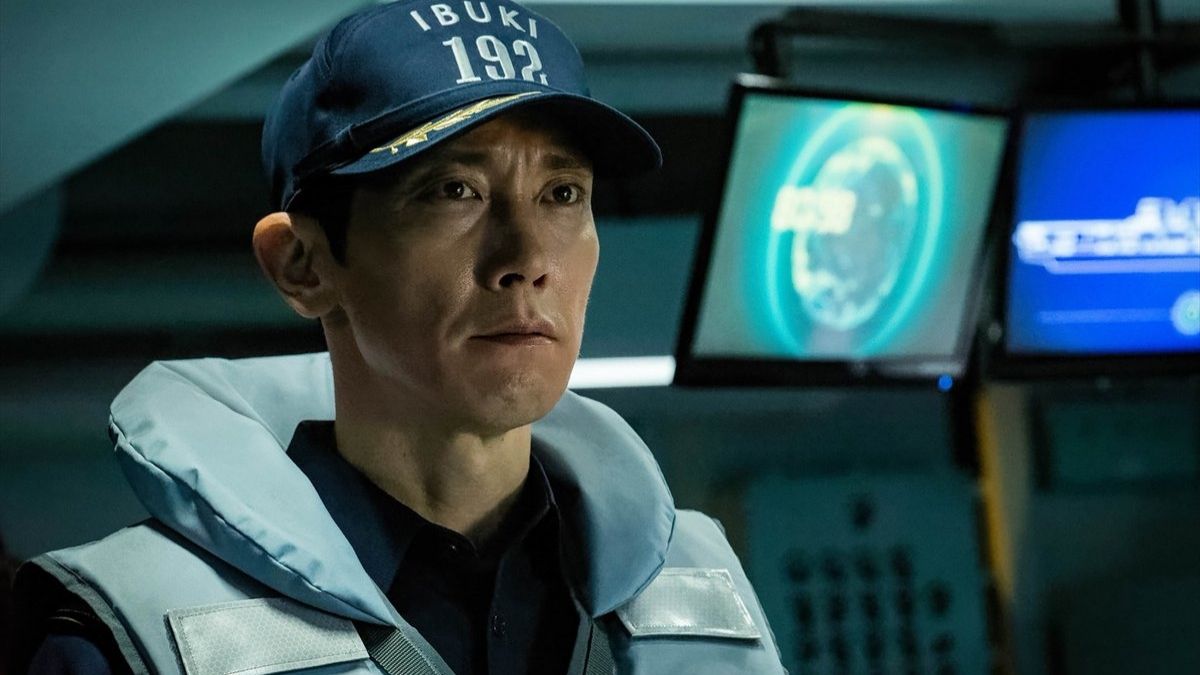
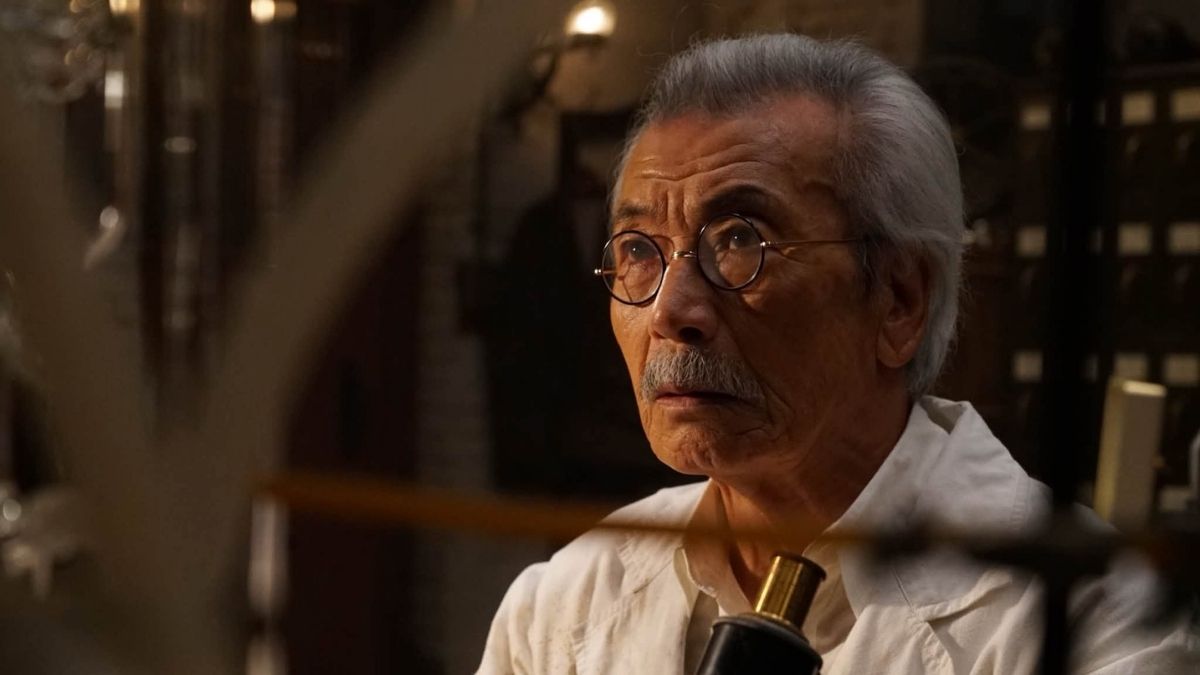
There isn’t enough kaiju, either. The existing scenes are excellent, both as monster fights and as creative scene constructions, but we needed one more scene with the titular monster to make up for how uninteresting the humans were this time around. This time, there are two new characters: Makoto Aoyama (Masami Nagasawa), a prodigal weather scientist with survivor’s guilt, and Kanji Murakami (Min Tanaka), a scientist with a Godzilla obsession. They add a decent amount of philosophizing and are both solid characters, but like everything else, they come up short.
Aoyoma has a lot to live up to after what she sees as personal failures during the war. Plus, she’s a woman, and thus has all the more to prove. But instead of grappling with these tensions, she ultimately becomes more of a wonderkind who struggles with them out loud but doesn’t have to overcome much adversity on-screen. Murakami raises the movie’s main political tensions around war, nuclear power, and imperialism, but Godzilla Minus Zero never fully puts a cap on those thoughts either.
Godzilla, as a creature and a franchise, has always represented Japan’s nuclear devastation and its post-war nuclear trauma. In Godzilla Minus Zero, an interesting tension emerges between the occupying American military and its apparent incompetence, the fact that the U.S. dropped the nuclear bombs in the first place, and the fact that Godzilla is the only weapon that can stop Ghidorah. The American incompetence comes up a few times early on, but is dropped entirely by the end. Instead, there’s a shoulder shrug about whether Japan can truly be isolated again or if it has to rely on the U.S. to rebuild post-war.
Godzilla Minus Zero offers a decent amount of fun when its kaiju are on screen.
There are light nods to the longer-term impacts of nuclear radiation on survivors of the nuclear bombs, but they’re never made explicit and are ultimately dropped as well. This is one of the more interesting and unique elements of the movie, and every time it almost dives deep into the subject, it pulls back in exchange for cheap sci-fi or bizarre acting and editing choices.
And when Godzilla Minus Zero makes its most interesting point about whether nuclear disarmament could ever be possible, or if weapons of mass destruction are necessary deterrents against mutually assured destruction, the movie decides to abandon the conversation altogether for a cheap sentimental conclusion.
The sentimental conclusion is very bad. It has this enormous wind-up, with callbacks from earlier in the movie and intense moments between all of the characters, especially young Akiko. And then it chickens out and lands on an entirely empty set of messages and a truly ugly VFX shot. It dampens much of the last act’s goodwill on the human side and diminishes the majesty of the CGI that actually does work.
Godzilla Minus Zero offers a decent amount of fun when its kaiju are on screen, but when you spend most of the runtime waiting for two giant monsters to start punching each other, the weak human element becomes harder to bear and softens what might otherwise have been an apt political metaphor.
Godzilla Minus Zero is playing now in theaters everywhere.
Godzilla Minus Zero
5.5/10
TL;DR
Godzilla Minus Zero offers a decent amount of fun when its kaiju are on screen, but when you spend most of the runtime waiting for two giant monsters to start punching each other, the weak human element becomes harder to bear and softens what might otherwise have been an apt political metaphor.