
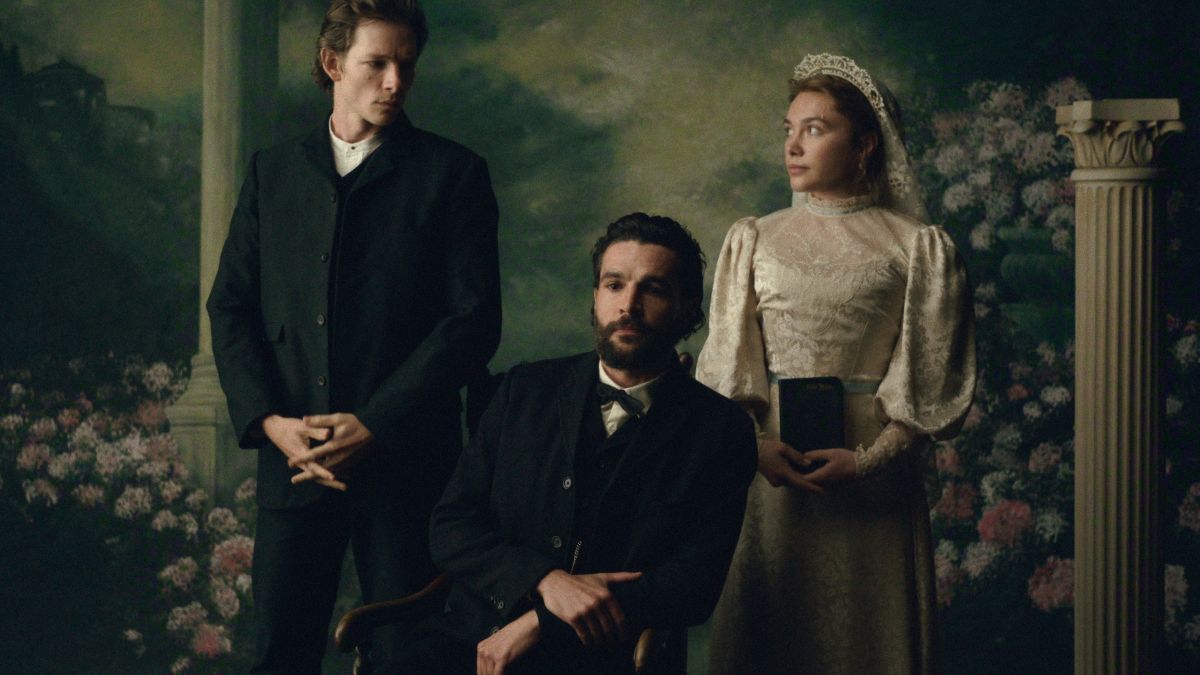
Few American novelists stand the test of time like John Steinbeck. Throughout his work, Steinbeck viewed the world through a religious lens, but not to proselytize. Instead, he used Christian concepts to explore the human condition and how we find ourselves in the same loop. East of Eden is one such seminal work. An intergenerational tale of trauma, resilience, and choice now takes on new life in Netflix’s Original adaptation, created and written by showrunner Zoe Kazan.
Titled East of Eden, Kazan’s screenplay builds on the foundation and themes of Steinbeck’s classic novel. If you’re unfamiliar, it tells the tragic story of one family across generations. From a tragic father down to tragic sons, the Trask family is one shaped by death and circumstance. At a young age, Adam Trask’s (Christopher Abbott) mother dies. When his father, Cyrus Trask (Tracy Letts), remarries, he gains a brother, Charles (Christopher Abbott).
Driven by his past, Cyrus raises his sons with an iron fist, all in an attempt to keep control over them. When he dies, Charles and Adam inherit his fortune. Living together in their farmhouse in Connecticut, Adam dreams of the utopia promised in California. When a woman winds up on their doorstep, beaten within an inch of their life, everything changes.
East of Eden is an adaptation made greater by its stellar cast.
Escaping her own violence-filled past, Cathy Ames (Florence Pugh) enters the Trask brothers’ lives with the need to survive. She isn’t looking for love or lust, just the protection that two brothers can give her. But when Charles is ready to kick her to the curb, she convinces Adam to marry her.
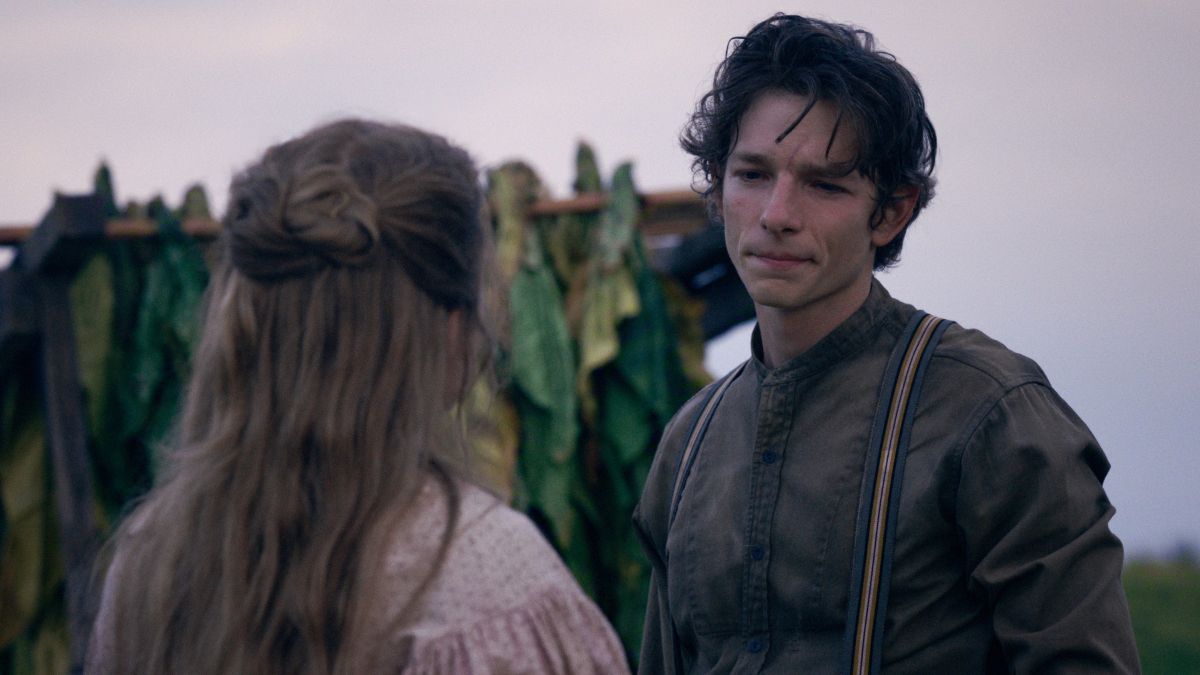
Mike Faist’s Charles stands out in a series defined by the depth of every on-screen performance. Faist’s visual uniqueness accents every bit of surly flame in Charles’ responses to life. Feeling alone and scarred by his father’s love, Charles is a well of emotion with its lid shut tight.
He loves in secret, he feels in secret, and he kills a part of himself to keep Adam satiated. Until he can’t anymore, ultimately pushing Adam and Cathy away. Charles’ past hangs heavy on his soul; his grief for a life he could have had without Adam in tow, if his mother survived. But his love is palpable, even in its sin.
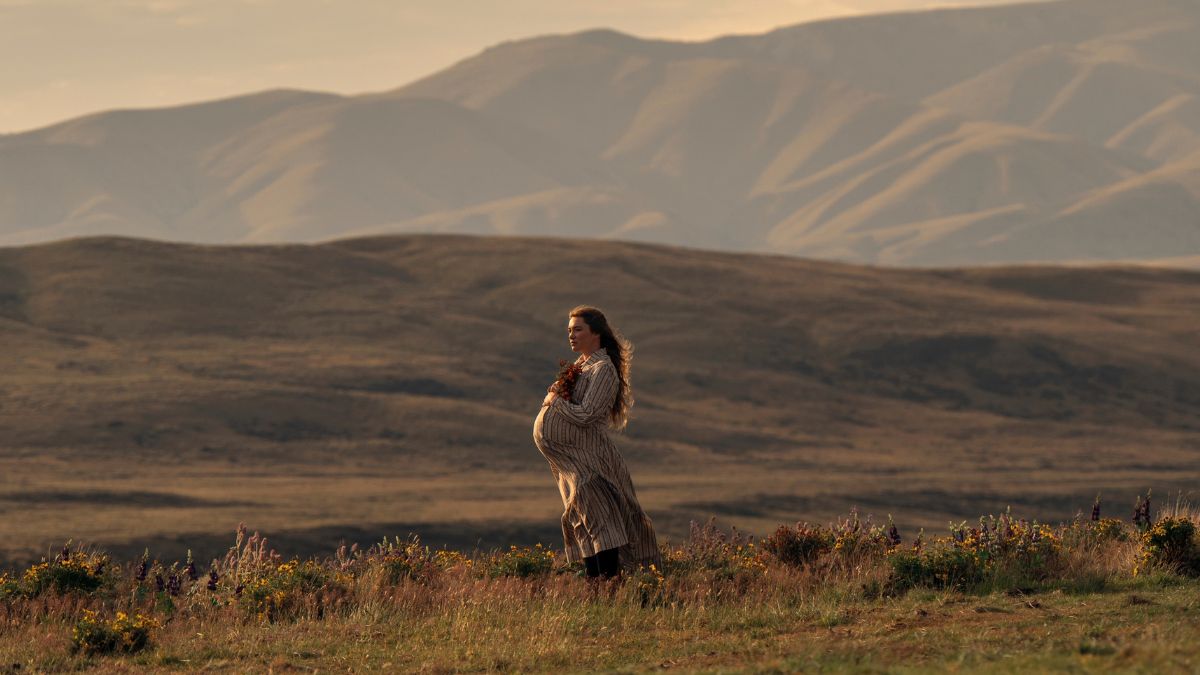
Now married, Adam moves himself and his wife to Salinas, California, hoping to find a future he can only dream of. But this new life isn’t one that Cathy wants. After having an affair with Charles, California isn’t a promised land, but a cage she’s being put in. Survival turned to love, only to return to survival again. When she winds up pregnant with one of the brothers’ children, she’s backed into a corner. Be a mother to twins, or be free. She chooses the latter.
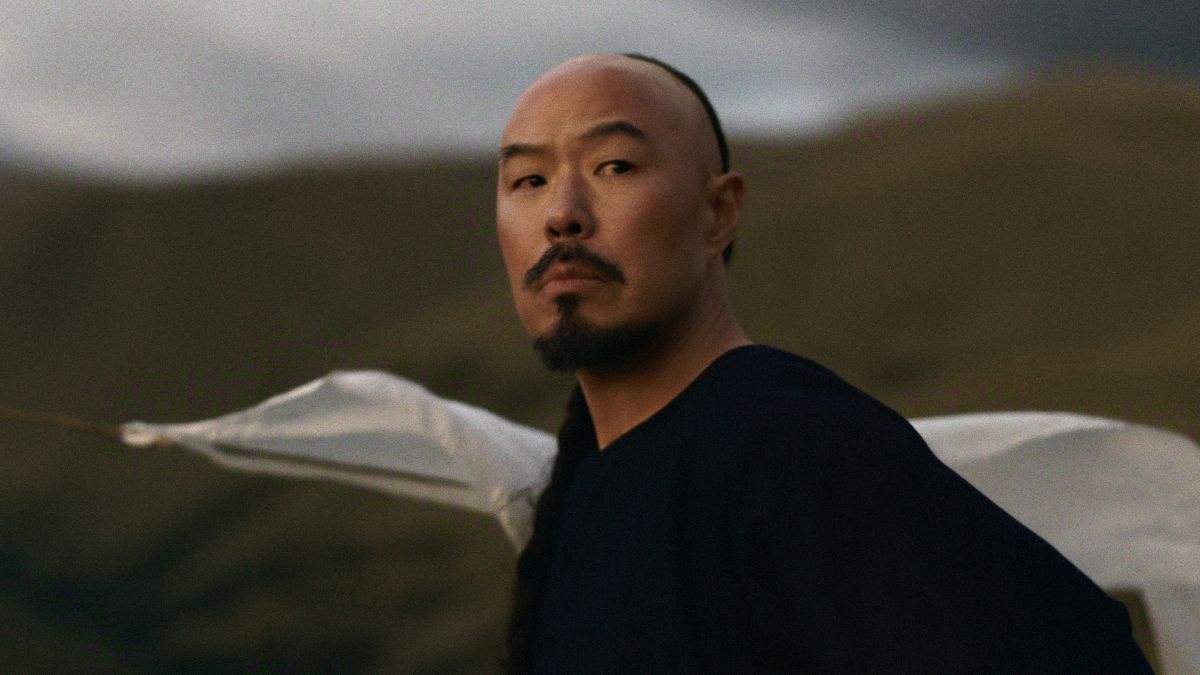
Left to take care of his twin sons after Cathy’s violent exit, Adam is helped by his Chinese-American manservant Lee, who transforms from “help” into family over the course of their lives. As a single father, Adam relies on Lee (Hoon Lee) and his neighbor, Samuel Hamilton (Ciarán Hinds), to raise the boys, with no idea what became of Cathy. To the Trask family, Cathy Ames is dead, and to her, that woman is dead too.
Having changed her name and moved to Salinas, Cathy works her way through a brothel until she takes it over, transforming it into California’s sadist haven. Powerful in the sin she sells, Cathy’s new persona is a Madame with a fortune and all the power she needs to never be touched by another man unless she chooses it.
Hoon Lee’s performance echoes the depth of his co-stars, bringing gravitas to a secondary role.
As a take on Cain and Abel, East of Eden’s conflict is spurred by brothers coveting what the other has, and how that jealousy festers. It rots from the inside and transforms its host once they choose to act on it. It’s a cycle that Charles and Adam lived and one that Adam’s children, Caleb () and Aron () do as well.
The crux of the novel is to look at the men and their sons and see the cycle of jealousy and guilt we can be trapped in. More than that, it pushes back against a sense of fate and looks at the choices people make to set their paths. But in the source material and other adaptations, the Trask men are the primary focus.
Here, though, we see two paths that choices take people outside of the Trask family. On the one hand, we see Lee. More dynamic than in the book, but still just as compelling, Lee’s growth depends on how comfortable she becomes in the Trask home. At first, he gives in to the expectations of the white men around him, exaggerating his speech to meet the pidgin expectations of America at the time.
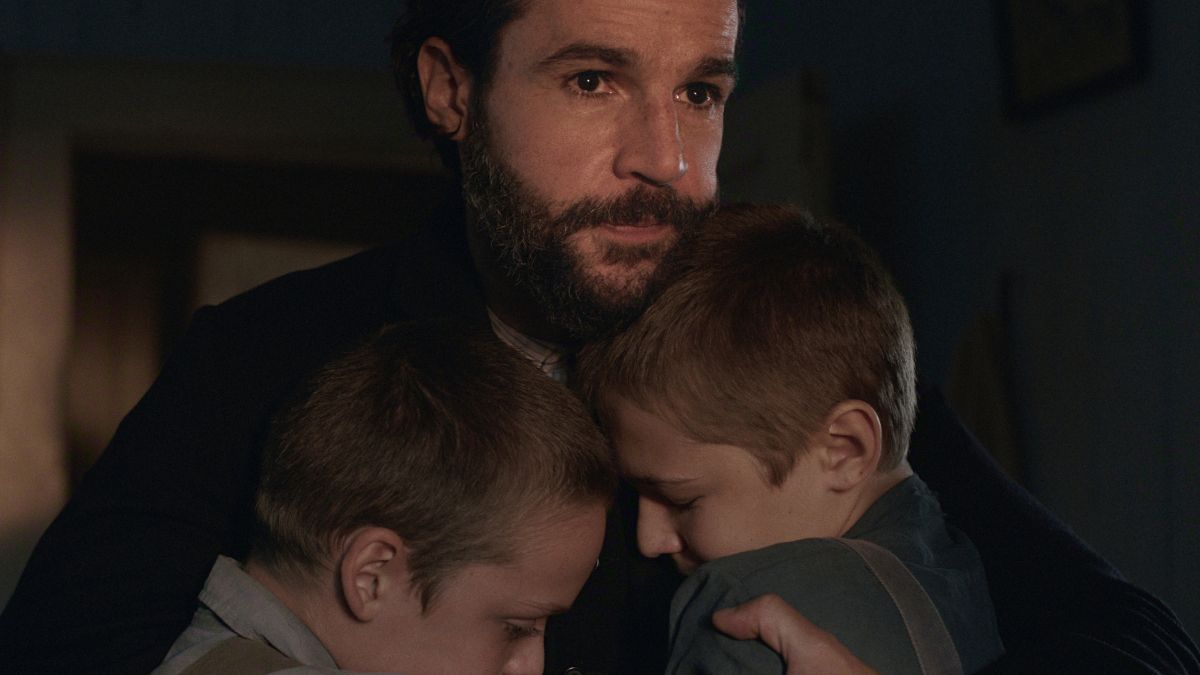
He wears traditional Chinese clothes, keeps a traditional hairstyle, and does all of it to blend in by sticking out in the exact way society wants him to. With the Trasks, he moves from manservant to family member, but only after venturing away to search for a sense of self he thought he craved. Sacrifice and choice are what stand at the center of every new revelation in East of Eden, and Lee’s story is central to understanding that in this take on the story.
Hoon Lee’s performance as Lee is loud with quiet emotion, carrying the story beats like a current. His presence as a sound mind and good man in the Trask home helps give Adam and his boys the skills and knowledge they need to see the world. Nothing is preordained, and it is human to choose. It is human to fail and be selfish, but it is equally as human to be good and kind.
Beyond Lee’s performance, Christopher Abbott shows up in great form. East of Eden builds on his sunken shoulders. It stews in his grief, and it impacts his sons, Lee, and the world around him. His performance is electric in its pain, and across the decades we see Adam change emotionally and visually.
Additionally, in Kazan’s retelling of East of Eden, Cathy’s desires also take center stage in a way Steinbeck explored less in his original novel. While this seven-episode mini-series adaptation isn’t a one-for-one retelling of the novel, it showcases the art of adaptation in how Kazan expands on Steinbeck’s themes.
Cathy Ames hasn’t been rehabilitated in East of Eden, but her soul has been laid bare.
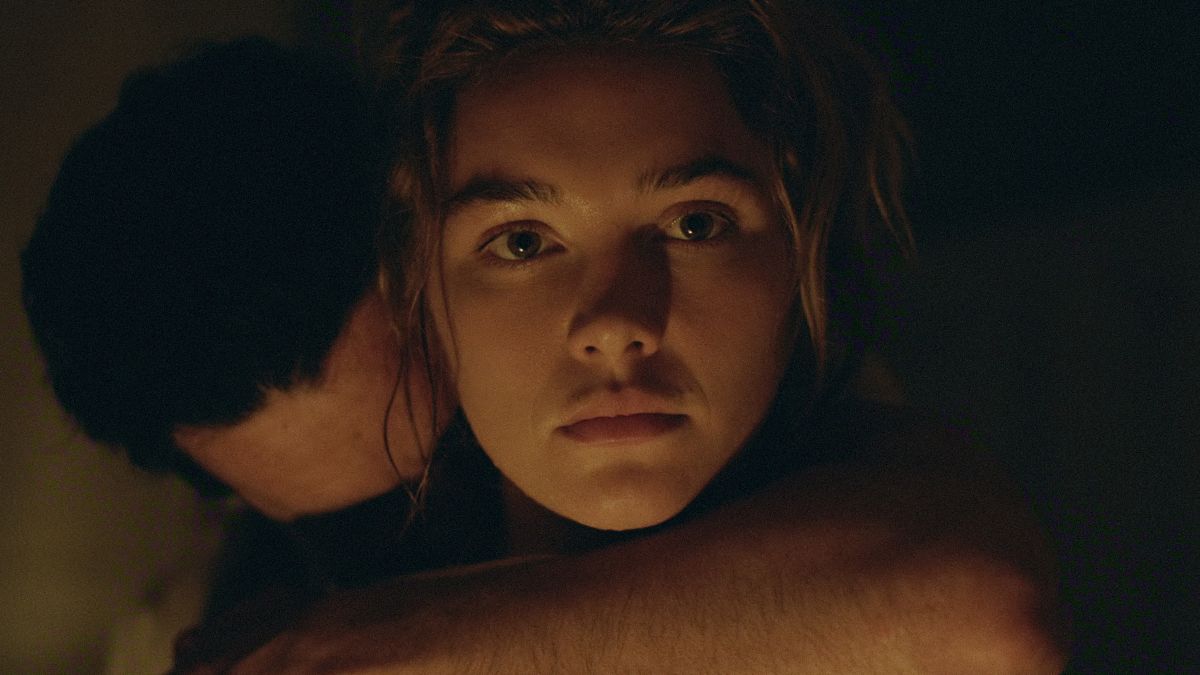
The official series synopsis on Netflix gave me pause: “This fresh interpretation of Steinbeck’s masterpiece will explore the multigenerational saga of the Trask family, focusing new attention on its indelible antihero, Cathy Ames.” If you’re familiar with the work, Cathy, like everyone in the story, isn’t inherently evil. But the choices she makes, the way of surviving that she chooses, are callous and Machiavellian.
The description of her as an anti-hero made me question if this was, yet again, another piece of classic literature written for the “girl boss” age. The reality was much more subtle, and the mini-series excels because of it. While Kazan’s screenplay gives Cathy more motive and drive, it doesn’t soften her edges. If anything, we see this tragic character unfold in the same detailed way we see the men in the Trask family.
Cathy has seen hardship and trauma, and violence that she can never truly escape. She’s pushed away the promise of love and has chosen herself over any man. She isn’t a bird to be caged, and she bites back at any hand that tries.
Kate kills, she maims, and she ultimately survives in a world that would rather see her crushed underfoot by an abusive man than thriving. But she isn’t an antiheroine. She isn’t someone to idolize, and, unlike the men in the story, things didn’t have to end the way they did.
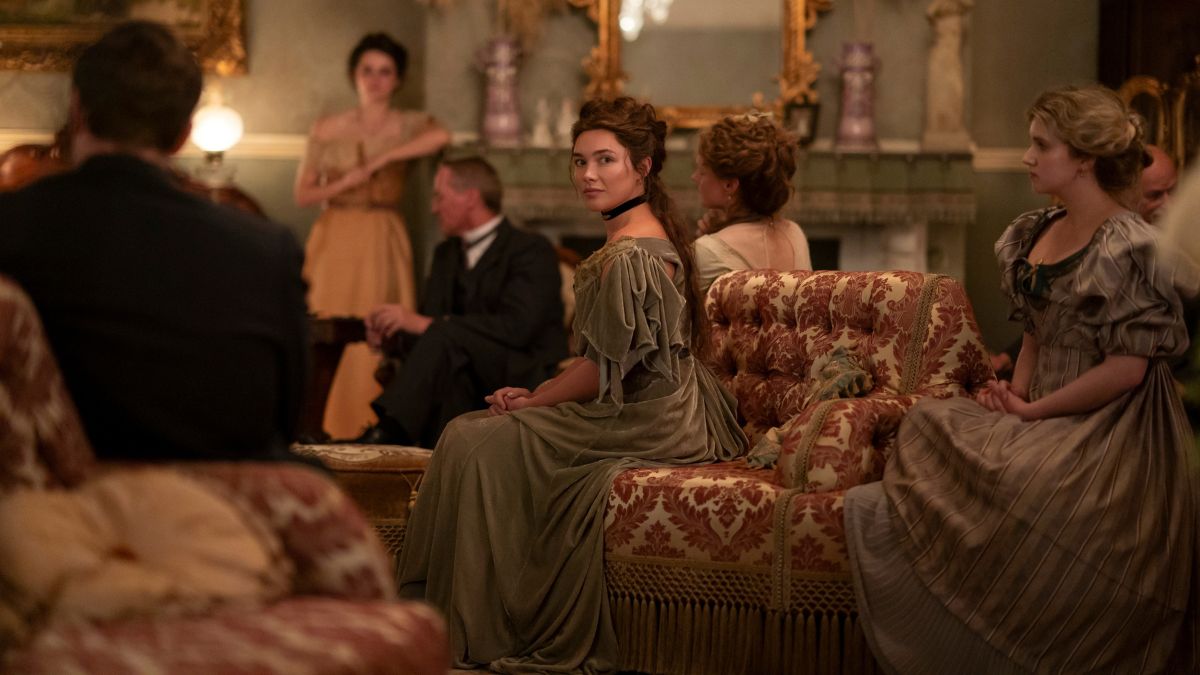
If anything, Netflix’s East of Eden adds vital background to seeing Cathy’s path. Still vile in her choices, but not without some sort of understanding. Much of the success in Cathy’s portrayal doesn’t just fall on the script; it also lies with the way that Florence Pugh brings her to life. There is malice, but there is also pain in every look. There is boredom and apathy, and there are also small glimmers of respite and joy that she just can’t seem to chase.
Pugh’s performance captures the cold demeanor Cathy brings to her crimes, but it’s never empty of another secondary emotion. Even when reciting vile lines, like when she instructs Adam to throw her newborns into a well, there is always something more to it. There is empathy for Cathy, but there is no sympathy. She is not made less violent or evil, but she does have her reasons explored, not forgiven by the camera’s eye.
That is very much the point of Steinbeck’s work. The banality of the situations shows that every act is a choice, and that choice is shaped by our experiences and shapes those that follow. With knowledge and drive comes the power to decide; fate is not a guide down the road, but a force we blame for our failings. And that is clear from Cathy to Adam, Lee, Aron, and finally Cal.
East of Eden is an adaptation that understands why John Steinbeck is a classic.
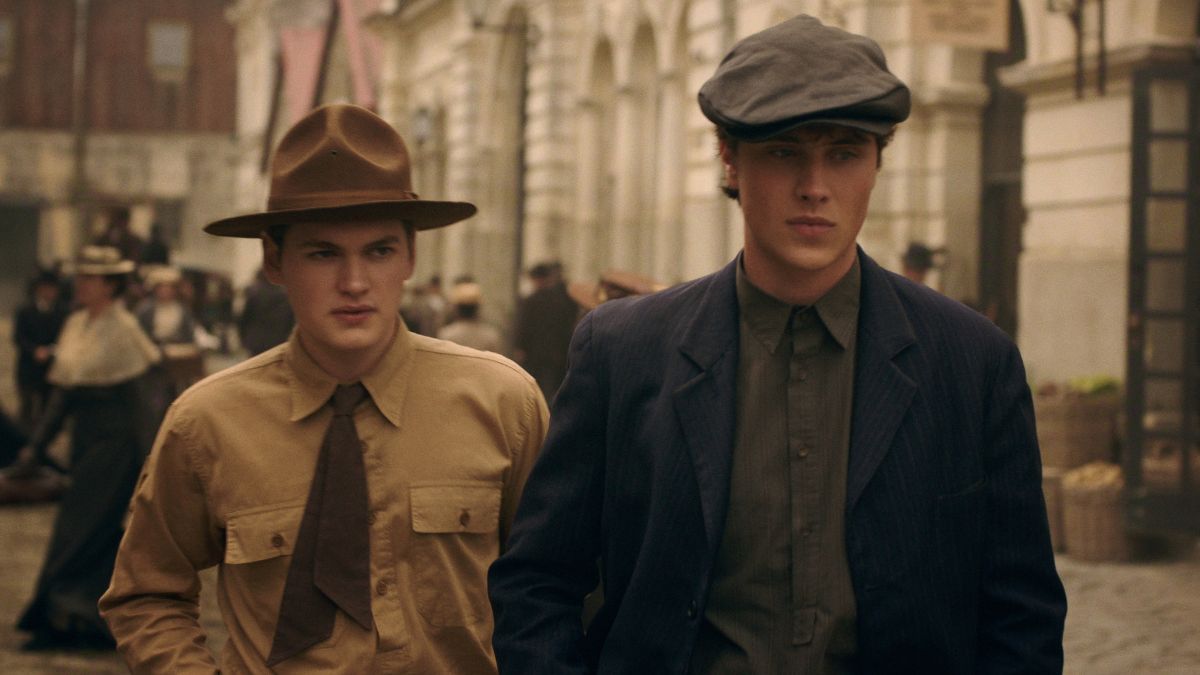
Overall, Zoe Kazan’s East of Eden may pull the camera toward Cathy, with her serving as narrator and a larger force in the mini-series than we see in the book, but its focus stays true to Steinbeck: Timshel. “Thou Mayest” roots East of Eden in every iteration. Here, Kazan’s attempt to tease out the details and ripples that cascade across a life and future generations is expertly crafted. But most importantly, Kazan’s screenplay handles the story’s end with such subtlety that it shows just how good this adaptation is.
Not every great ending is steeped in pomp and circumstance. Not every ending serves justice or answers every question. Sometimes, an ending is a simple phrase and the emotion it brings out in its characters. Sometimes, the best endings look to their audience and set them on their way, with the knowledge to make their own choice and the goal to break whatever cycle is constraining them.
That’s always what made East of Eden powerful as a text, and this adaptation stays true to it. We are not bound by fate or trauma. Our pasts leave fingerprints on us, but in the end, we look to the horizon and answer “thou mayest.”
East of Eden is a modern adaptation that doesn’t turn its back on the past, but expands on the tragedy. Expanded for the mini-series format, this period drama has a lot to love. Where “Wuthering Heights” left me angry, this Netflix Original has restored my faith in adapting classic literature.
East of Eden is streaming now, exclusively on Netflix.
East of Eden (2026)
9.5/10