
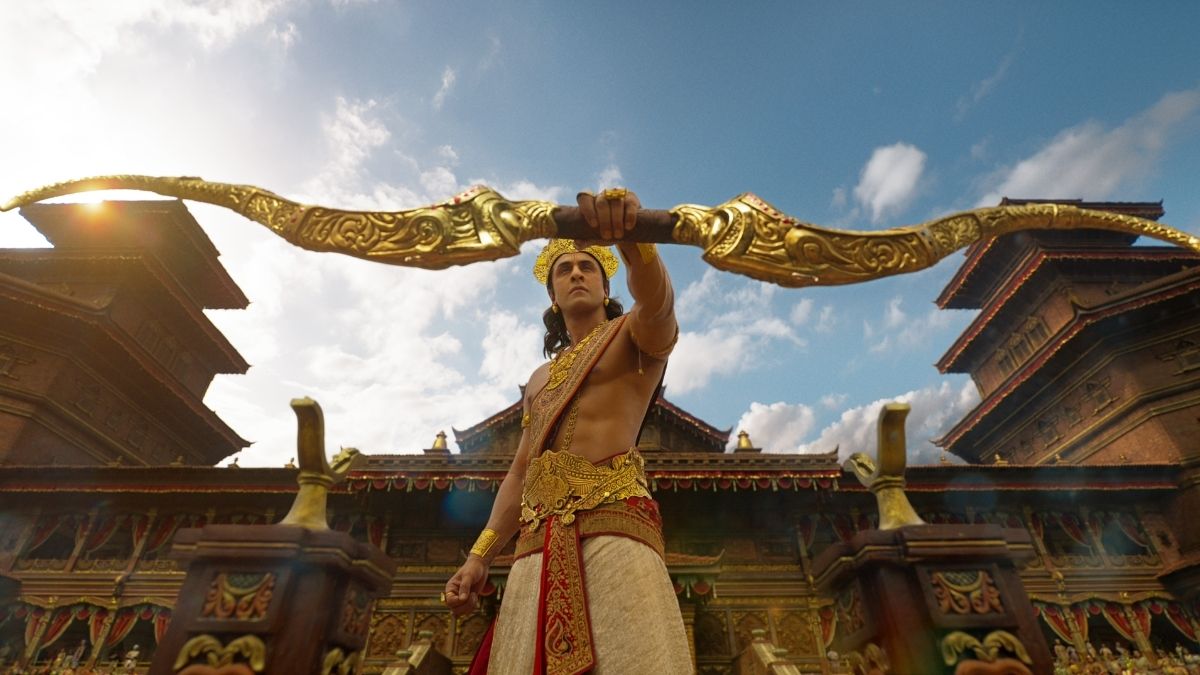
A colossal myth, a colossal budget, a colossal film. All descriptors that loom over Bollywood’s self-proclaimed, record-setting event of the year, which not only aims to bring an ancient, sacred Hindu epic to glorious life, but also to introduce the world to its timeless tale (with the unusual involvement of Hollywood studio Sony Pictures as its global distributor). Yet, despite its massive scale, outsized 195-minute runtime, and calculated positioning as India’s deeply reverent answer to The Odyssey, Nitesh Tiwari’s Ramayana: Rise of a Legend lands with all the force of an ornate thud.
Drenched in sloppy computer-generated imagery, flatly lit and repetitively framed, and swamped in on-the-nose, expository writing, to call Tiwari’s would-be epic an exhausting endeavour would be a grand understatement. An unabashed eyesore, the film’s copious amounts of tepid slow motion only further dilute the natural splendor and wonder of its ancient source material, reducing it to a thematically weightless, painfully paced, and dramatically inert exercise in flashy spectacle.
Breathlessly rushing from one plot beat to the next, with scarcely a moment for contemplation or to take in its mystical setting, Ramayana: Rise of a Legend feels designed less as a cinematic experience than as a collection of moments to be clipped, circulated, and consumed in bite-sized morsels across social media. That these creative missteps ultimately coalesce into what amounts to merely the first instalment of a much larger story only makes the whole exercise feel all the more exhausting.
Ramayana: Rise of a Legend rushes through its story, leaving little room to breathe.
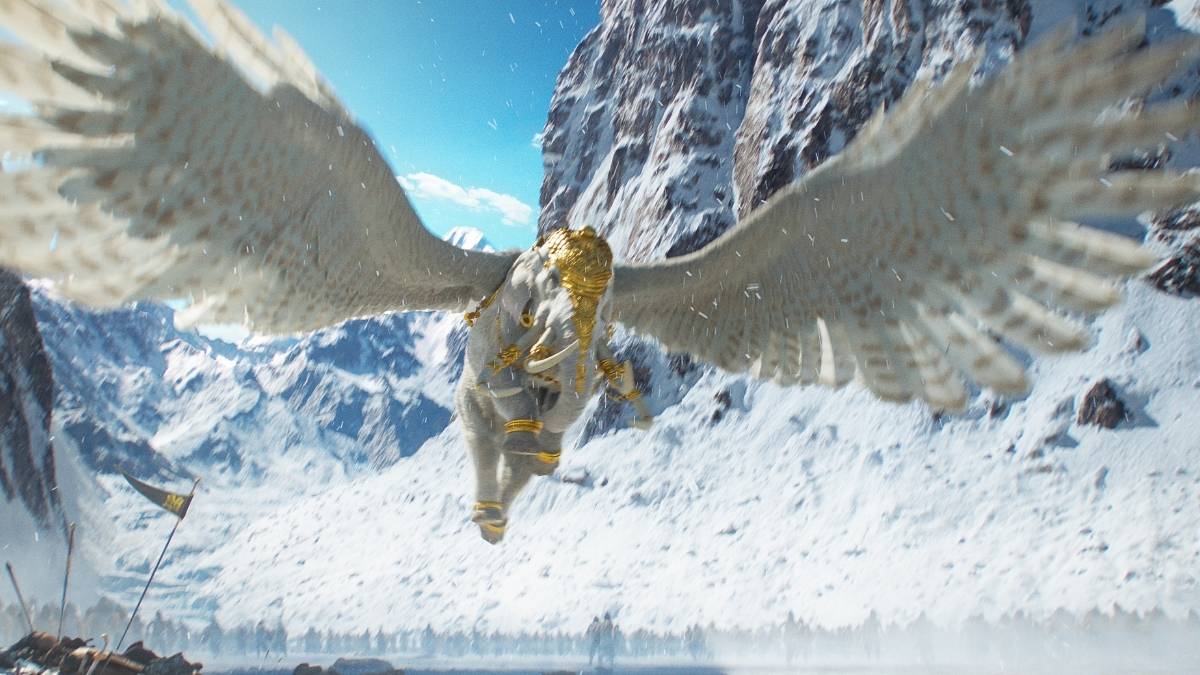
The script, penned by Tiwari and Shridhar Raghavan, unfolds less like a screenplay than a series of expository regurgitations and thematic proclamations. Ramayana: Rise of a Legend begins with a crash course in Hindu cosmology, laying out the three principal deities and their respective roles in cosmic creation: Brahma (“The Creator”), Shiva (“The Destroyer”), and Vishnu (“The Preserver”), alongside the eternal battle between Devas and Asuras.
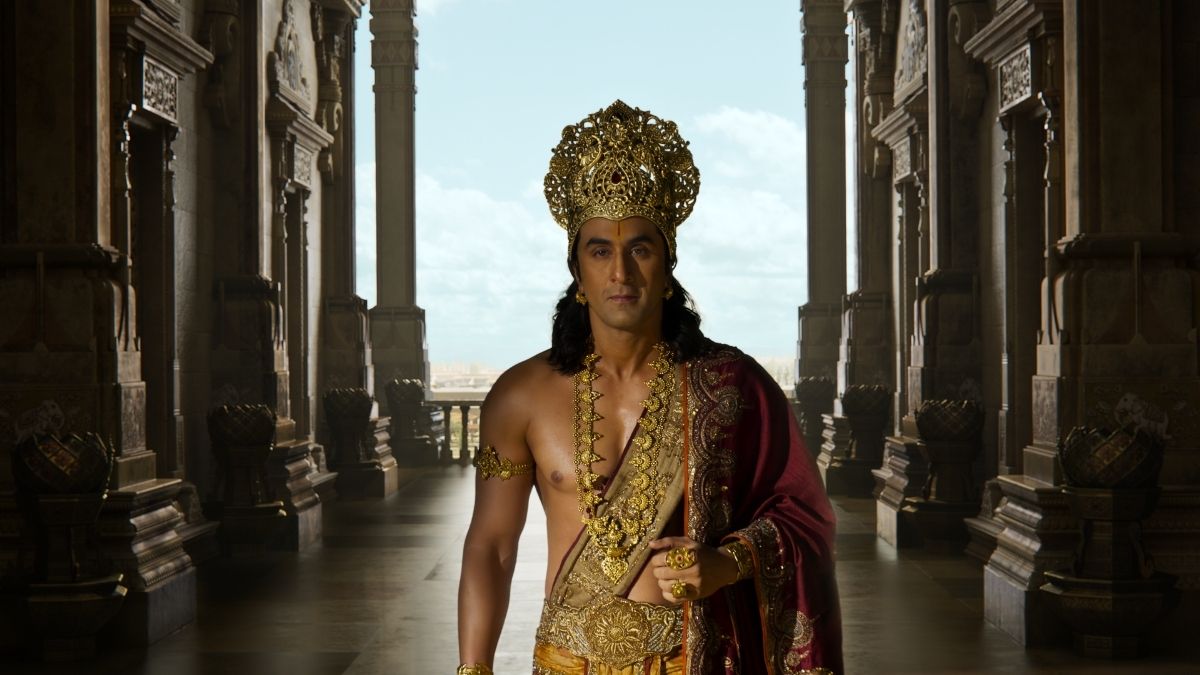
From there, it chronicles the rise of Ravan (Yash) as an increasingly unstoppable antagonistic force, while introducing the early life of Prince Ram (Ranbir Kapoor), heir to the kingdom of Ayodhya and the latest avatar of Vishnu.
As Ram cultivates spiritual virtue and a warrior’s prowess, his journey takes him to the kingdom of Mithila, where he triumphantly strings Shiva’s divine bow and wins the hand of Princess Sita (Sai Pallavi) in marriage. Yet his newfound bliss is short-lived. His stepmother, Queen Kaikeyi (Lara Dutta), invokes sacred oaths to demand that Ram relinquish his claim to the throne and undertake a fourteen-year exile.
Bound by his Dharma (duty) as a devoted son, Ram renounces his birthright and departs for the perilous forest, accompanied by his devoted wife, Sita, and brother Lakshman (Ravi Dubey), setting him on a cosmic collision course with the all-powerful Ravan.
Telling rather than showing, Ramayana: Rise of a Legend falls into storytelling pitfalls.
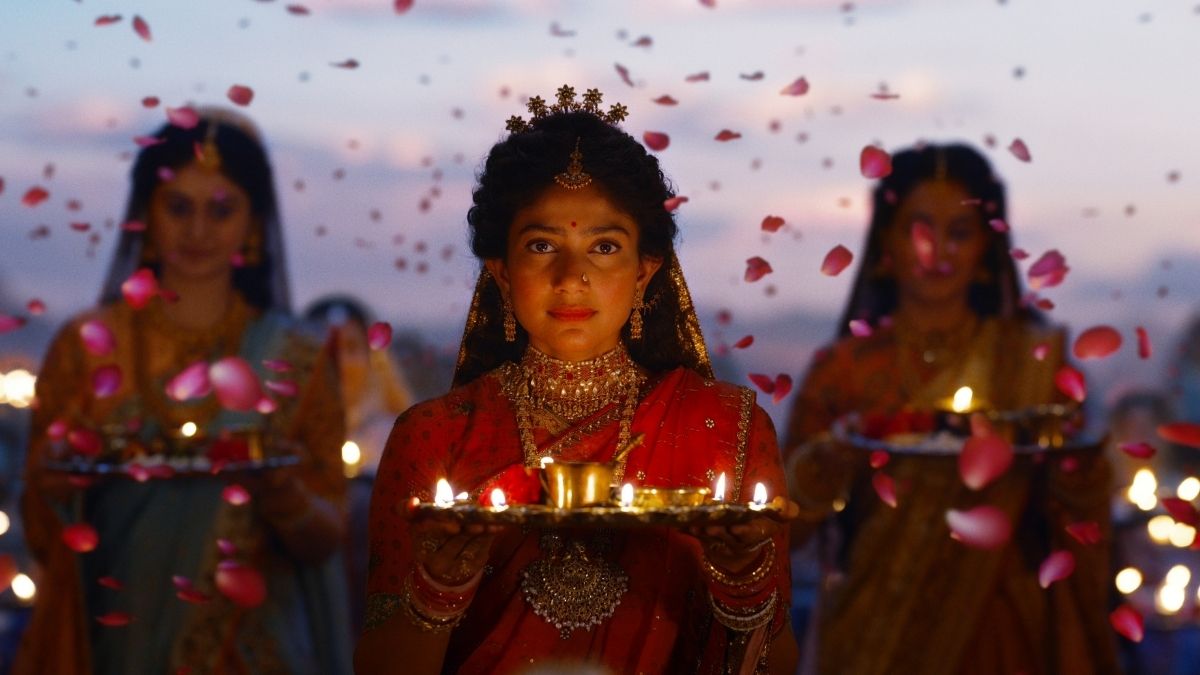
It’s a tale with which generations are already familiar. Still, rather than allowing it to unfold and be experienced, Ramayana: Rise of a Legend insists on spelling out its plot developments, character motivations, and thematic insights at virtually every turn. For a film so vehemently determined to establish itself as the premier Bollywood epic of its era, it’s remarkably adamant about talking instead of showing.
Ramayana: Rise of a Legend postures toward grandiosity and majesty without ever cultivating the visual or dramatic language required to immerse us in either, as though crippled by an insecurity that its haphazard editing and composition might otherwise fly over audiences’ heads.
That same heavy-handedness bleeds into the performances, which range from expressionless to hopelessly one-note, seemingly regardless of the emotional or dramatic circumstances at hand. Characters become little more than vessels for plot progression and virtuous lectures in Ramayana: Rise of a Legend, rather than fully realized people with whom audiences can connect on a more human, emotional level.
After all, what makes Ram so significant is that Vishnu chooses to experience the world through a human avatar, an incarnation whose humanity is inseparable from his divinity. It’s a dimension Ramayana: Rise of a Legend seems largely uninterested in exploring, beyond fleeting acknowledgements, as though it were less concerned with touching our hearts and minds than with catering to our rapidly deteriorating attention spans.
The performances do little to flesh these characters into fully realized beings.
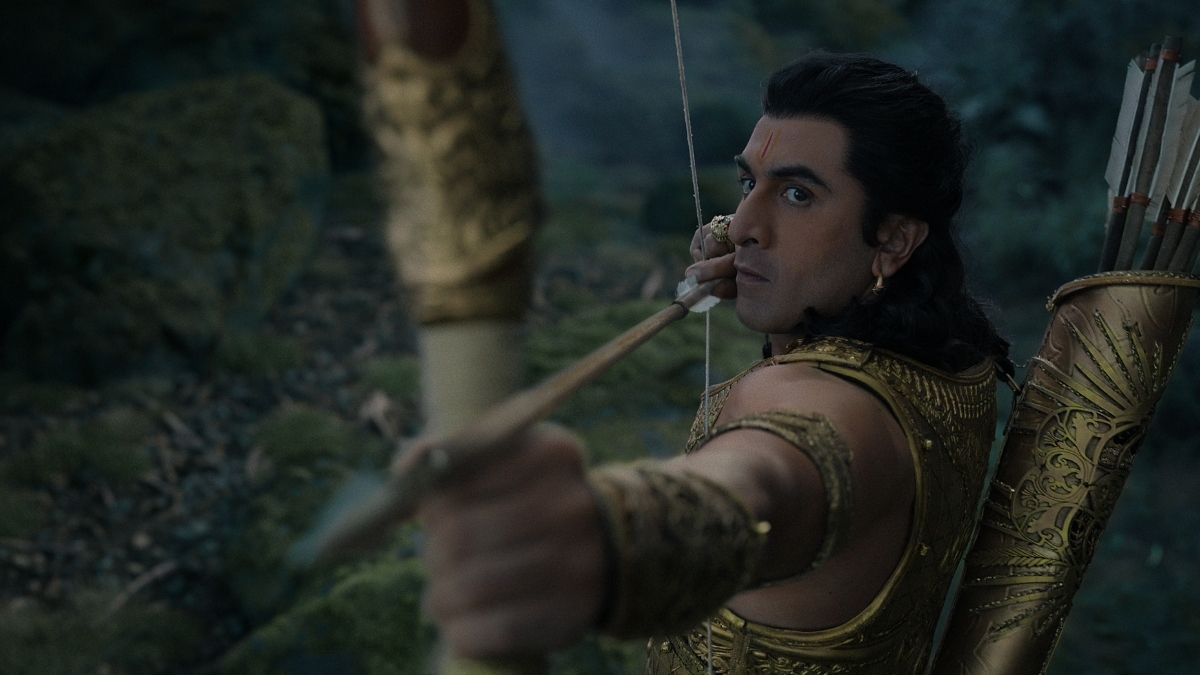
Ramayana: Rise of a Legend simply barrels from one plot beat to the next, never allowing its characters, or the audience, a moment to sit with the emotional consequences of what’s unfolding. There is little room for intimacy, vulnerability, or genuine human connection amid all the grandstanding and computer-generated maneuvering, leaving even the most consequential moments feeling strangely hollow and weightless.
As janky and jarring visual effects pervade each loud, brash action set piece, Ramayana: Rise of a Legend nevertheless aspires to establish a world that is at once opulent and majestic, a rich cross-section of man-made grandeur and natural splendor.
Yet, when it isn’t undermining its would-be impressive action and dance choreography with incessant overediting and airless staging that never allows a sequence to settle, its backgrounds remain conspicuously blurred, offering little sense of how its characters inhabit their environments or relate to the mythic spaces around them.
Poorly done CGI lends nothing to the sense of lived-in reality of the settings the film takes us.
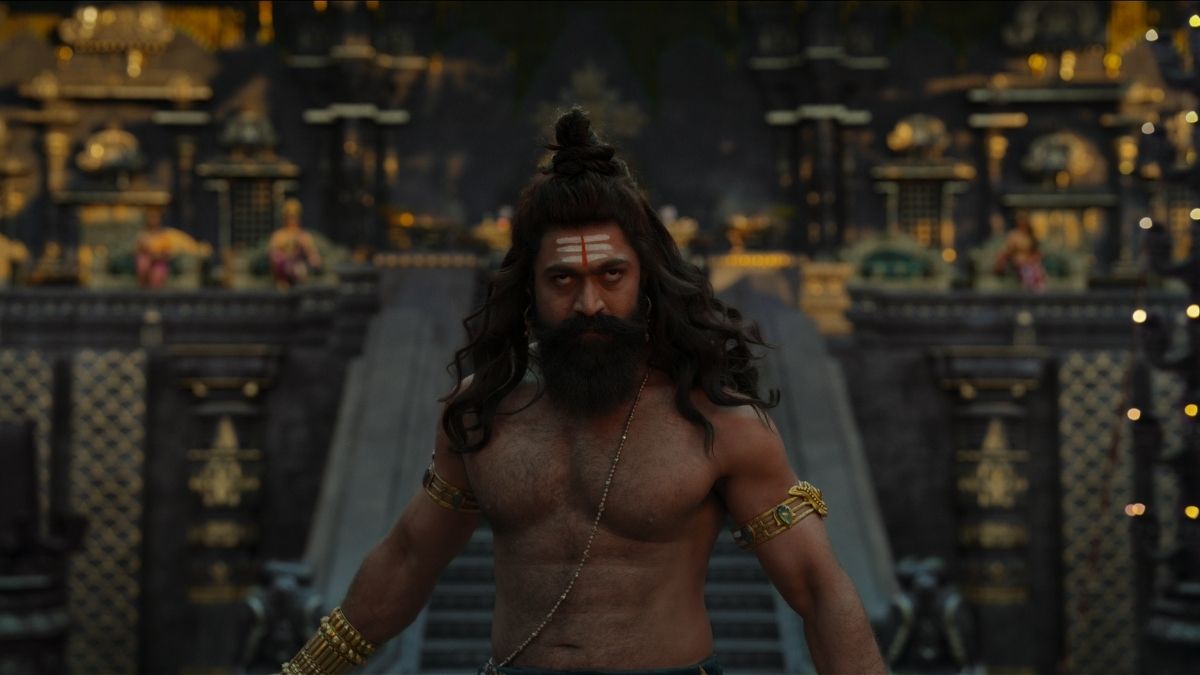
Often, there is scarcely any suggestion that a world exists beyond the confines of the frame, making it difficult to believe that these characters inhabit a dangerous, feral, yet beautiful and breathing world, rather than merely performing on an elaborate, synthetic soundstage. The result is a film devoid of contrast, rough edges, and grit, with every creative choice seemingly sanded down in pursuit of mass appeal.
Outside its CGI-infected action spectacle, the quieter moments are composed like those of a low-budget television serial, suffused with the same handful of texture-less, reverse over-the-shoulder shots, lifeless reaction cutaways, and painfully prolonged slow-motion character reveals. It all points to a film that feels less directed than messily captured on a grand canvas, hoping its sheer scale can make it look like an epic rather than actually feel like one.
While a handful of interesting visual ideas surface throughout the film’s mammoth, sleepily plotted runtime—including an arresting interpretation of Ravan’s iconic ten heads—they do little to embolden a work so desperately lacking in stylistic conviction, despite its brash, often self-conscious attempts at formal flourish.
Ramayana needs no embellishment to prove its magnificence, and this adaptation misses the mark.
Perhaps this is precisely the kind of production to be expected from an industry increasingly entangled with the currents of religious nationalism, where the adaptation of sacred texts has become as much an exercise in cultural affirmation as a cinematic undertaking. Even the most hallowed of stories can be repackaged as bloated, VFX-ridden, MCU-ified spectacles, their religious significance seemingly expected to compensate for their technical and dramatic shortcomings.
In such a climate, criticism of an adaptation can readily be conflated with criticism of the sacred text itself, as though questioning the artistic merits of a film were tantamount to questioning the faith and cultural traditions it draws upon.
Though, if nothing else, Ramayana: Rise of a Legend reminds us that no matter how shoddy or schlocky the filter through which its story is retold, the fable itself will endure. Its lessons, grandeur, and enduring capacity to capture the imagination will outlast any one filmmaker’s attempt to leave their mark upon it. If anything, Tiwari’s film serves as an inadvertent reminder that the Ramayana needs no embellishment to prove its magnificence—and certainly no lackluster cinematic treatment to diminish it.
Ramayana: Rise of a Legend releases in theaters November 5, 2026.
Ramayana: Rise of a Legend
3/10
TL;DR
If anything, Tiwari’s film serves as an inadvertent reminder that the Ramayana needs no embellishment to prove its magnificence—and certainly no lackluster cinematic treatment to diminish it.