
How on earth does someone write about the incendiary Naza? Directed by half of the filmmakers behind the immense No Other Land, Yuval Abraham and Rachel Szor, this is yet another vital film that documents the ongoing genocide in Gaza, enacted by Israeli forces. It pleads with the viewer to sit with the horrors that unspool so clinically from the mouths of IDF members as they discuss, in tones of apathy or even light amusement, the systematic means in which they’ve managed to oppress, attack, and eradicate thousands upon thousands of lives in an effort to obliterate and erase an entire culture.
If you’re someone who’s been following the ongoing genocide in Gaza since 2023, it’s not the content of Naza that will surprise you (disgust you, yes). Films such as No Other Land, Put Your Soul on Your Hand And Walk, American Doctor, The Voice of Hind Rajab, and more, plus the efforts of on-the-ground journalists who make it their mission to depict these daily atrocities while working to stay alive, have alerted us to the cause. What sets the film apart and recalls other documentary efforts about the roots of evil, such as The Act of Killing, is the cold testimonies of these committed evils.
Unlike The Act of Killing, however, there’s no comeuppance. There’s no moment where the evildoer’s body reacts without his say-so, recoiling and nauseated by what was perpetuated. A member of an elite unit describes the mass killings as eliciting a sense of insane “fun.” He pivots, then, to say that he still considers “Nazis as evil, but what does that mean I am?” Even these words that hold whispers of self-reflection and rightful condemnation are tinged by that earlier admission of “fun”.
Naza unveils the rhetoric of dehumanization among IDF soldiers and operatives.
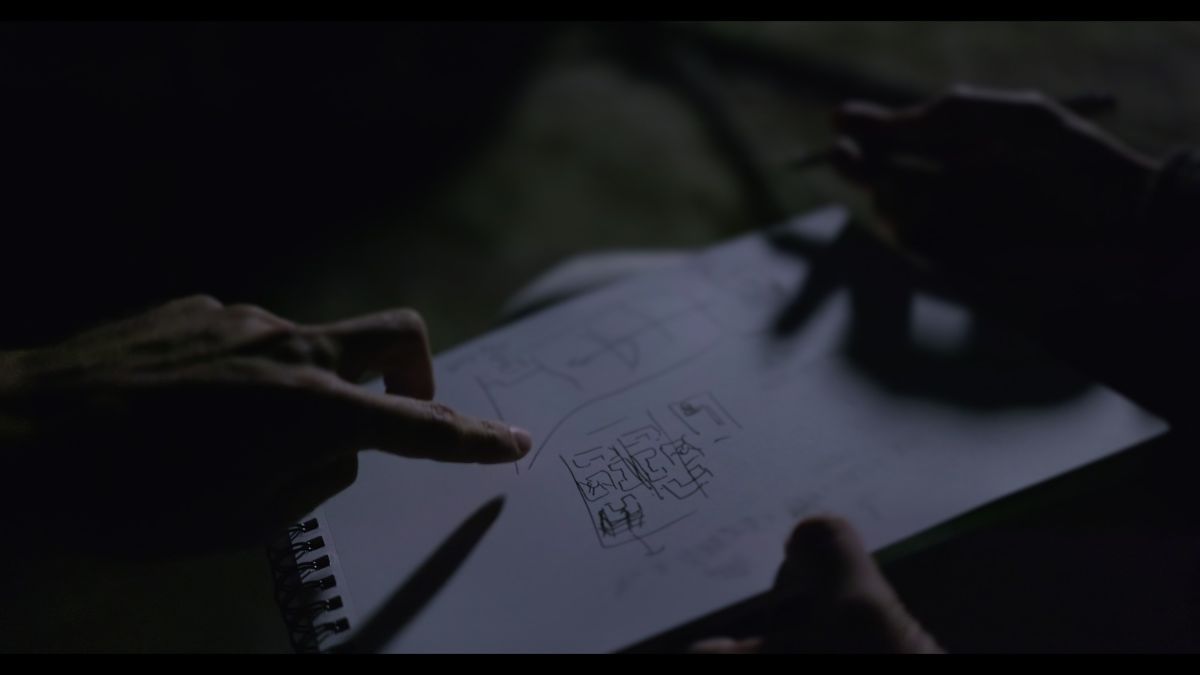
While No Other Land was a joint effort between Palestinian and Israeli filmmakers, it’s noteworthy now that, even in the wake of their Oscar win, Palestinian filmmakers Basel Adra and Hamdan Ballal are absent. They aren’t given the same freedom that allows their Israeli counterparts to do what was accomplished here. Over the course of the documentary, Abraham and Szor conduct interviews with 24 Israeli soldiers and intelligence officers over the course of three years.
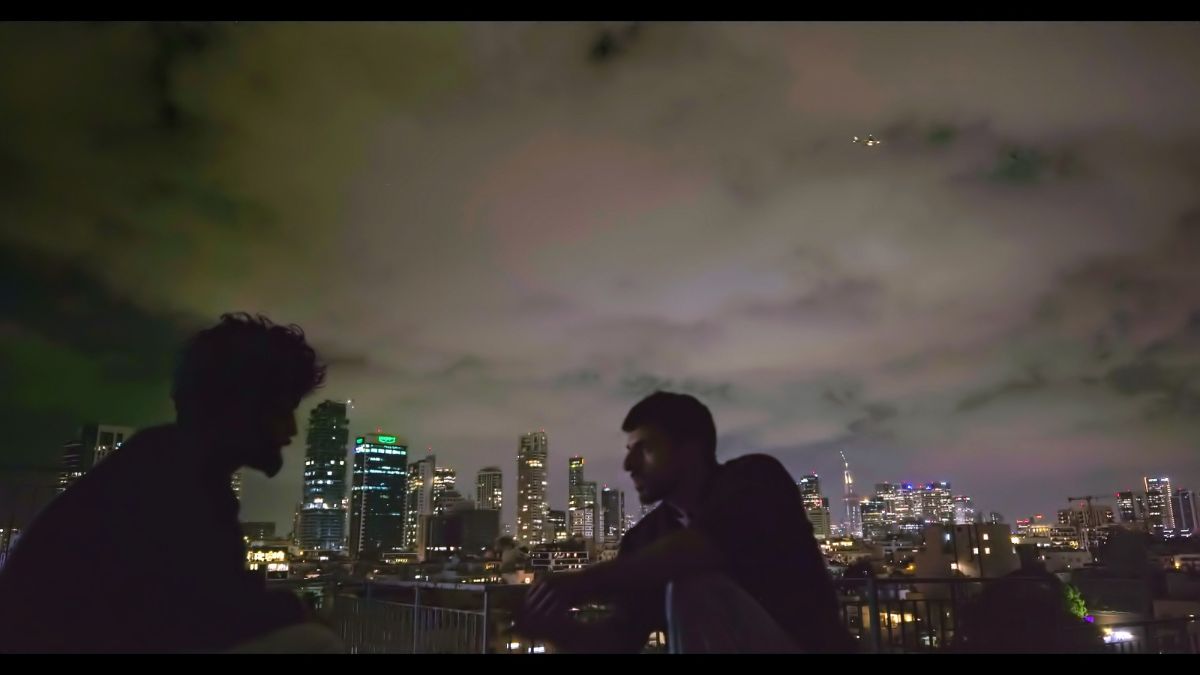
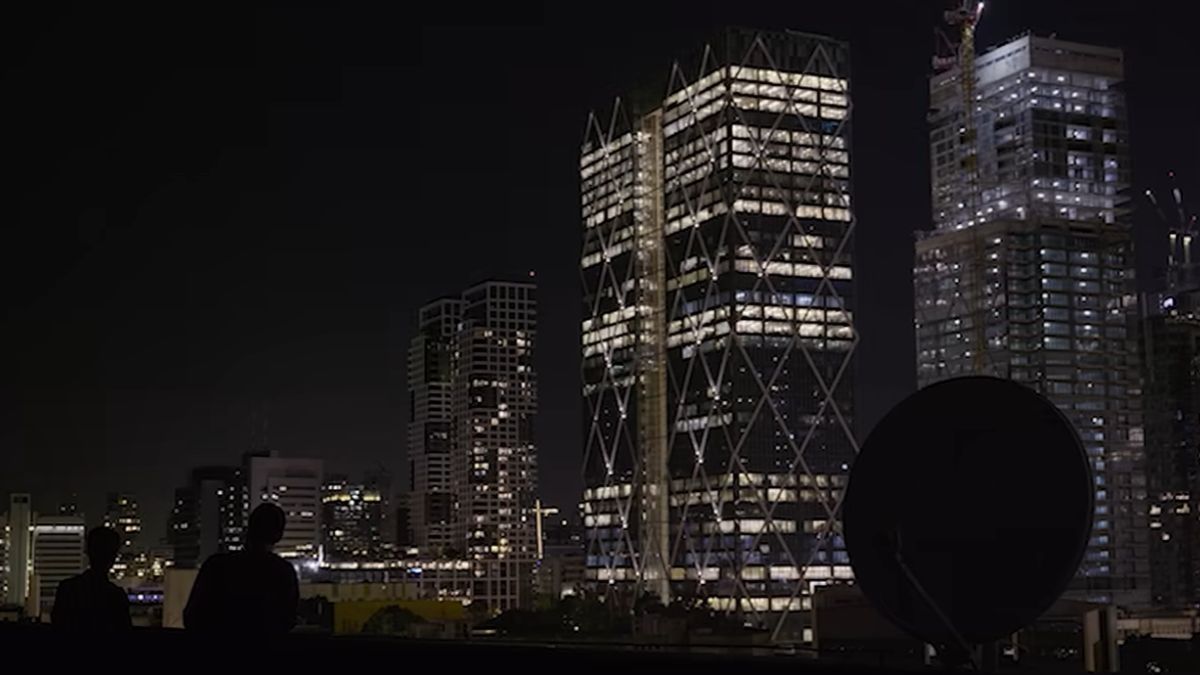
Shot on the rooftops of Tel Aviv as people go about their nightly routines as propaganda plays on their television screens, it paints a striking contrast. The electricity is still on; their lives move forward. It’s a deliberate image when used against the final moments of the film, as we see Gaza under siege and its people in the dark and under rubble.
While the soldiers and officers have their faces and voices hidden for anonymity, their testimonies are damning. From sharing the use of AI for surveillance and admitting that there’s a large margin for error, to the use of programs such as “Where’s Daddy,” a term that indicates the hacking of a child’s phone to learn when their father will be home before unleashing an air strike that will kill the entire family, there’s such grim inhumanity lacing itself throughout their speech.
“Naza” itself is a term meant to dehumanize, meaning “collateral damage, the number of civilians who will die from a strike.” Soldiers describe the attacks and surveillance as feeling like “Gods” (as “insanely fun “). They describe it like playing a video game, as a “factory of targets.” They declare the best way of killing them is at night, because it has the greatest success rate. They’ve been taught there are no innocents in Gaza. When nearly an entire family is killed in an airstrike, it’s labeled a failure. Not because of the innocent civilians lost, but because the one target wasn’t present.
The testimonials paint a destructive, miserable picture.
When one interviewee is asked, “Why kill them?” he answers with the appallingly non-committal “I don’t know.” How aren’t we all disgusted with ourselves? In No Other Land, members in Masafer Yatta – a target of Israeli forces since 2019 in the documentary – watch as their homes and livelihoods are slowly, destructively stolen from them. One says that “They made us strangers in our own land.” Earlier in the film, Basel remarks that “They destroy us slowly.”
In Naza, an IDF soldier admits that “The goal is to destroy.” Later, another declares, “We have erased history.” Because it’s not just that they’ve killed families and removed them from their homes; they destroy any hint of their existence, removing the hope for a return.
Naza is patient in how these horrors unravel, weaving in historical elements that further flesh out how the genocide reached such a furious, publicly gazed-upon peak. From Israel installing Gaza’s telephone infrastructure, to a younger Benjamin Netanyahu defining terrorism as “violence against innocents,” to the reminder that Gaza and Tel Aviv share the same coastline, the historical blends with the present day.
The film is vital and enraging. All we must do is refuse to look away.
By letting us sit with the inflammatory statements presented by the soldiers and operatives, as they describe with apathy or amusement how they’ve sought to destroy an entire people, the unrest and sense of helpless rage stir more potently. And, by the devastating final moments, a harsh reminder of what these attacks take, it seems impossible to know what to do with what we’ve just watched.
It’s important to sit with that discomfort. It’s vital to recognize the sheer, immeasurable scale of loss, and to chafe against the ease of complicity. This isn’t so much a rallying call as it’s a pointed, glaring indictment. Naza informs us that since the start of the genocide, 74,000 Palestinians have died in Gaza. And then we return to the lit skyline of Tel Aviv, as another soldier describes how he listened to a family die in agony. We hear another say they felt like God. And we wonder what the hell we’re even doing.
It’s miserable and intense and so profoundly vital that it’s hard to put into words. And others have done it better. How do you watch Naza and not walk away changed? The freely given testimonies reek with rancid man-made evils, a reminder of just how much humanity can take despite all they’ve been given. We have this one glorious life, and for all who cherish it, who recognize the miracle in it, plenty more see it as nothing more than a game. Viscerally unpleasant and necessarily informative, Naza is unflinching, even if we want to avert our gaze.
Naza will stream globally in early December on The Guardian.
Rating
How do you watch Naza and not walk away changed? The freely given testimonies reek with rancid man-made evils, a reminder of just how much humanity can take despite all they’ve been given.