

Writer/director Jenna Cato Bass’s latest film, Future Tense, lives up to that feeling, with tension bubbling between its main characters from the moment they first appear. The anxieties and all-too-timely realities of climate change are woven into every inch of the screenplay, grounded in place by the strain of a relationship on the verge of collapse. With the question of the future hanging in the air for both the planet and the film’s couple, Bass crafts a thoughtful film that, while being a little on the nose, leaves a sense of fulfilling ambiguity.
Future Tense is set in near-future South Africa. Background news reports fill in the information you need to gauge the situation. With nowhere for the wealthy to get away from climate disasters, they now book luxury time-travel excursions as a form of escape from Platonia. And surprise surprise, Platonia has control over who and what makes an impact in the past. The wealthy having power over such things is believable, and that privilege is one of many topics Lwando (Lawrence Maleka) and Tara (Kristen Raath) touch on in their journey to the past.
Lwando has won a trip to the past and invites his partner, Tara, along. From the start, an awkward tension hangs between them. It’s clear Tara wants something more, as Kristen Raath shows through her body language, but Lwando keeps pushing her away. He has bigger things on his mind, and when his agenda for the trip comes into focus, their incompatibility becomes clearer, as does how different their approaches to life are.
The future hangs in the balance for not just the planet, but one couple on the verge of collapse in Future Tense.
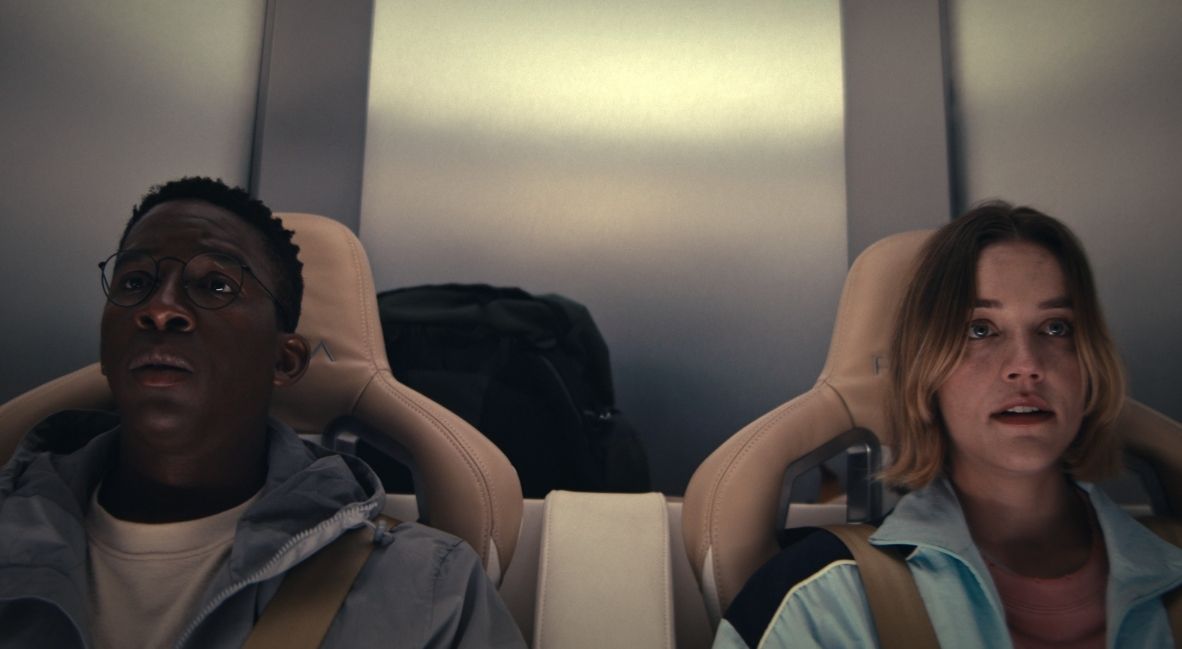
The time-travel mechanics are stripped back, yet Lawrence Maleka and Kristen Raath deliver convincing performances that do just enough to immerse you in the moment they traverse back to 1647. Upon arrival, one might guess they haven’t actually gone back. The home they emerge into is modern, but it is the sheer expanse of the natural environment, untouched in all of its overt, colorful brightness, that tells them they are in the past. They just need to ignore the guards carrying guns on the property.
Some might envision a busier time in the past for time travel, but the simplicity of the location and time helps Bass (and Lwando, through his reasoning) show how much changed that year due to the arrival of European settlers on the shores. This seemingly innocuous point in history (mind you, history is generally written by the victors) carries weight, reminding us that what we might not think is important likely is important to others. And once things start to escalate, Bass shows how each action carries its own ripple effect.
Even with these more fantastical features of Future Tense, the heart of the film is in its couple and their conflict. Lawrence Maleka instills a guarded sensibility in Lwando, conveying the sense of a man with his walls up, a lone wolf, if you will, taking on the burdens of the world on his shoulders. Kristen Raath’s Tara is more carefree and, in a way, naive. She wants to love and be loved, yet also prefers to walk alongside others, more comfortable being led rather than taking the initiative.
The chemistry and tension between Lawrence Maleka and Kristen Raath is electric.
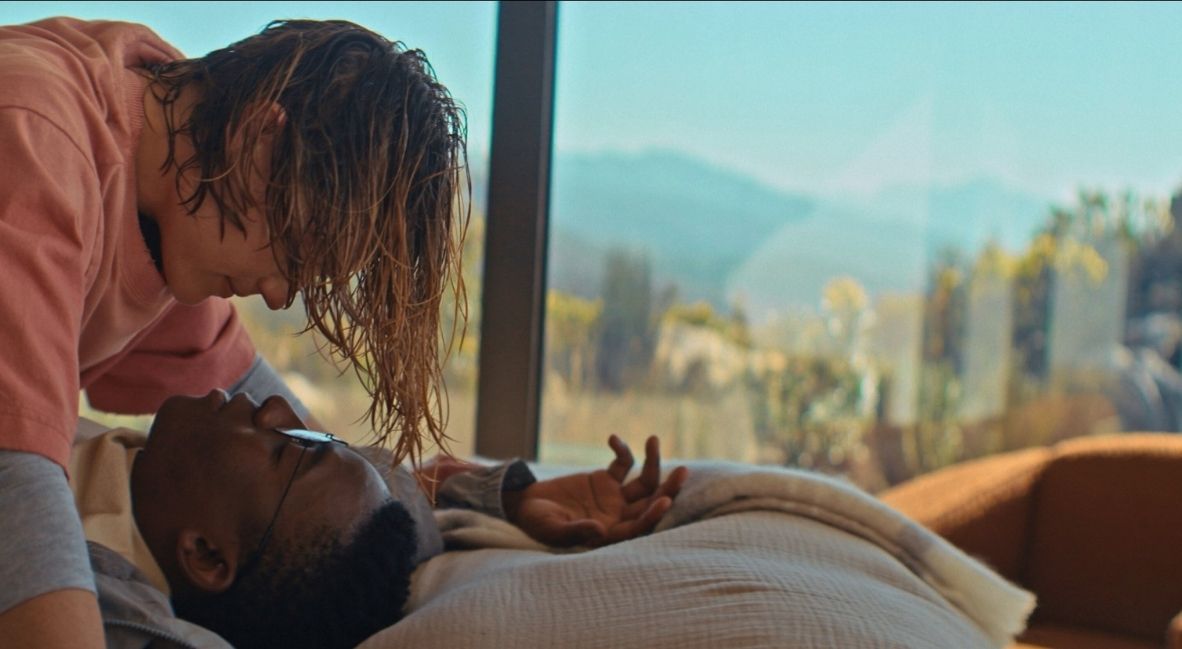
These two opposing personality types create a delicious, and occasionally cringe, friction that adds an incredibly human element. On a macro level, Future Tense illustrates the broader idea of how climate change affects the world, but through a close lens, Bass uses this couple to show how it affects people on an interpersonal level. From the decision to rear a child to debates over individual versus collective action, the conversations are easily recognizable.
Some will say Future Tense lacks subtlety in its portrayal of the broader anxieties surrounding climate change and the discussions the film brings to light for dissection. With the world premiere happening mere weeks after the Nepal flash flood and the hottest summer on record, I’d argue that the time for subtlety is about dead when it comes to addressing these topics. That said, the ending monologue, set against a backdrop of natural serenity, beats the driving message over the head as an overly cautious, extra measure to make sure the audience gets what is going on.
In her fourth feature film, Jenna Cato Bass’s foray into sci-fi becomes an unfortunately timely story about climate change, the romanticization of the past, and the ripple effects the past (via colonization and corporate greed) has left on us all. What ultimately makes Future Tense a must-watch, though, is the relationship at its core, where the future is up in the air, and unspoken conversations threaten to break apart everything they hold dear.
Future Tense had its world premiere at the 2026 Toronto International Film Festival.
Future Tense
8.5/10
TL;DR
What ultimately makes Future Tense a must-watch, though, is the relationship at its core, where the future is up in the air, and the unspoken conversations threaten to break apart everything they hold dear.